 Skip to navigation
Skip to main content



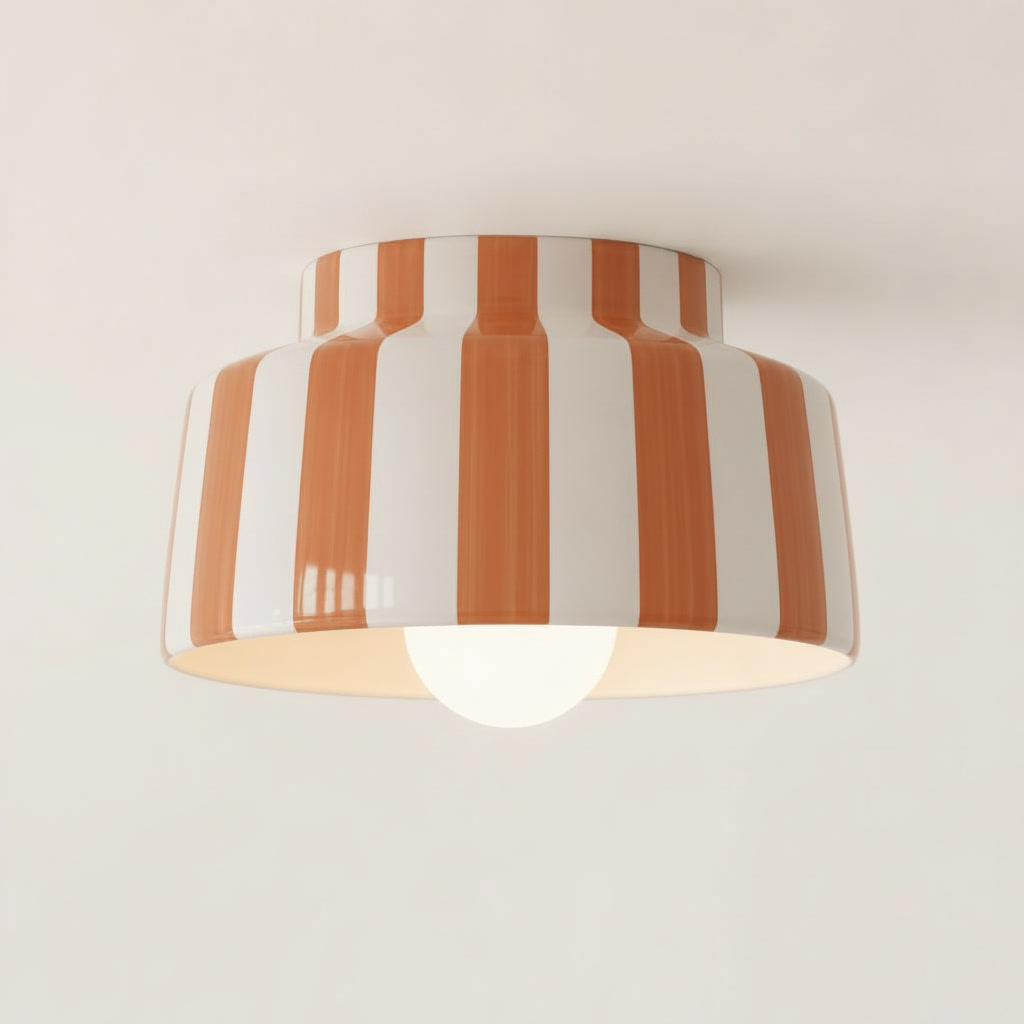
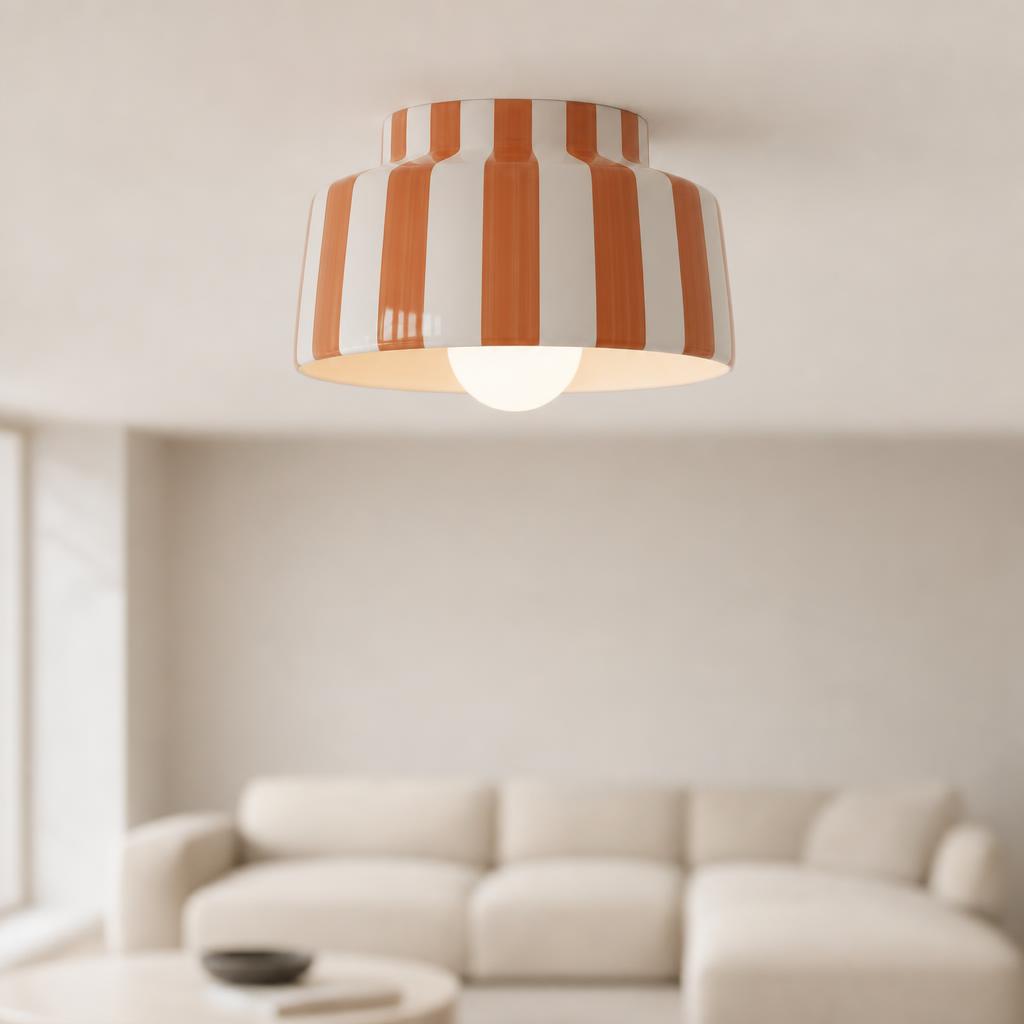
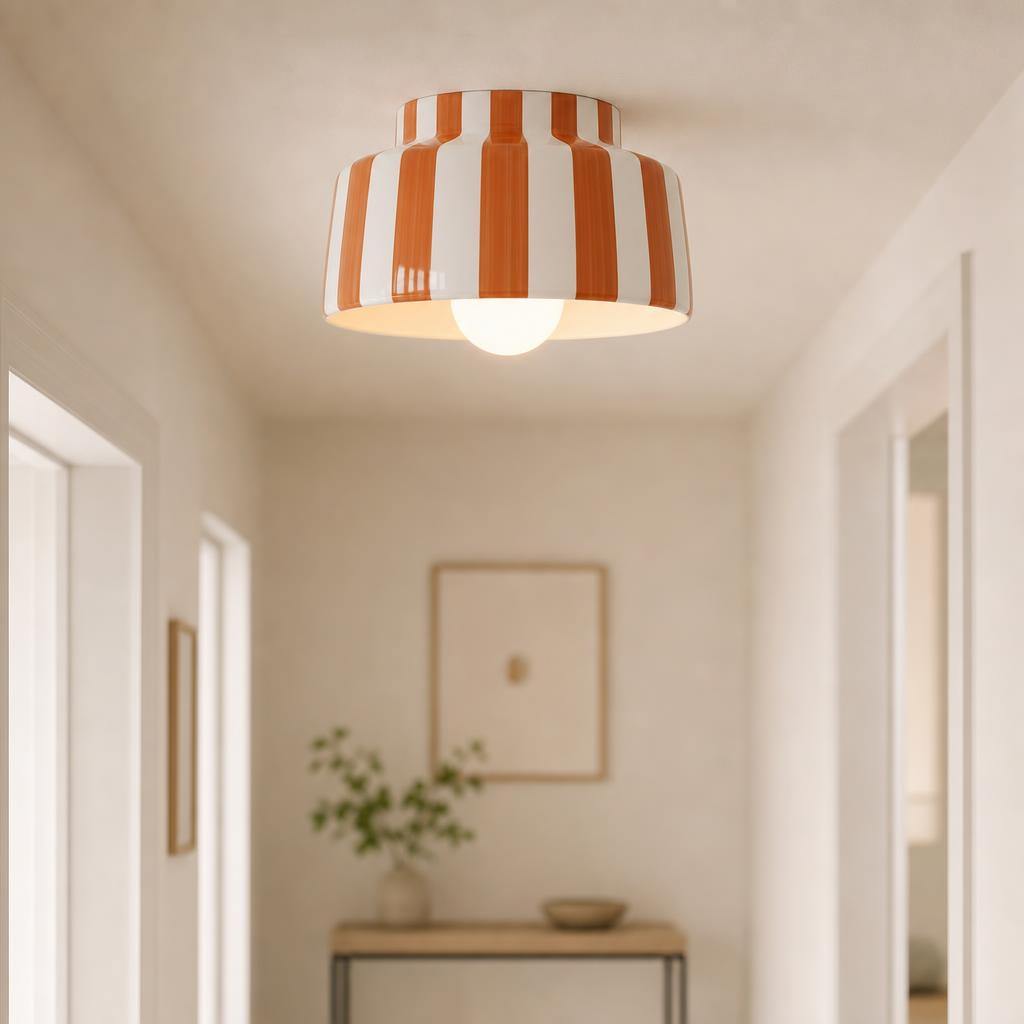
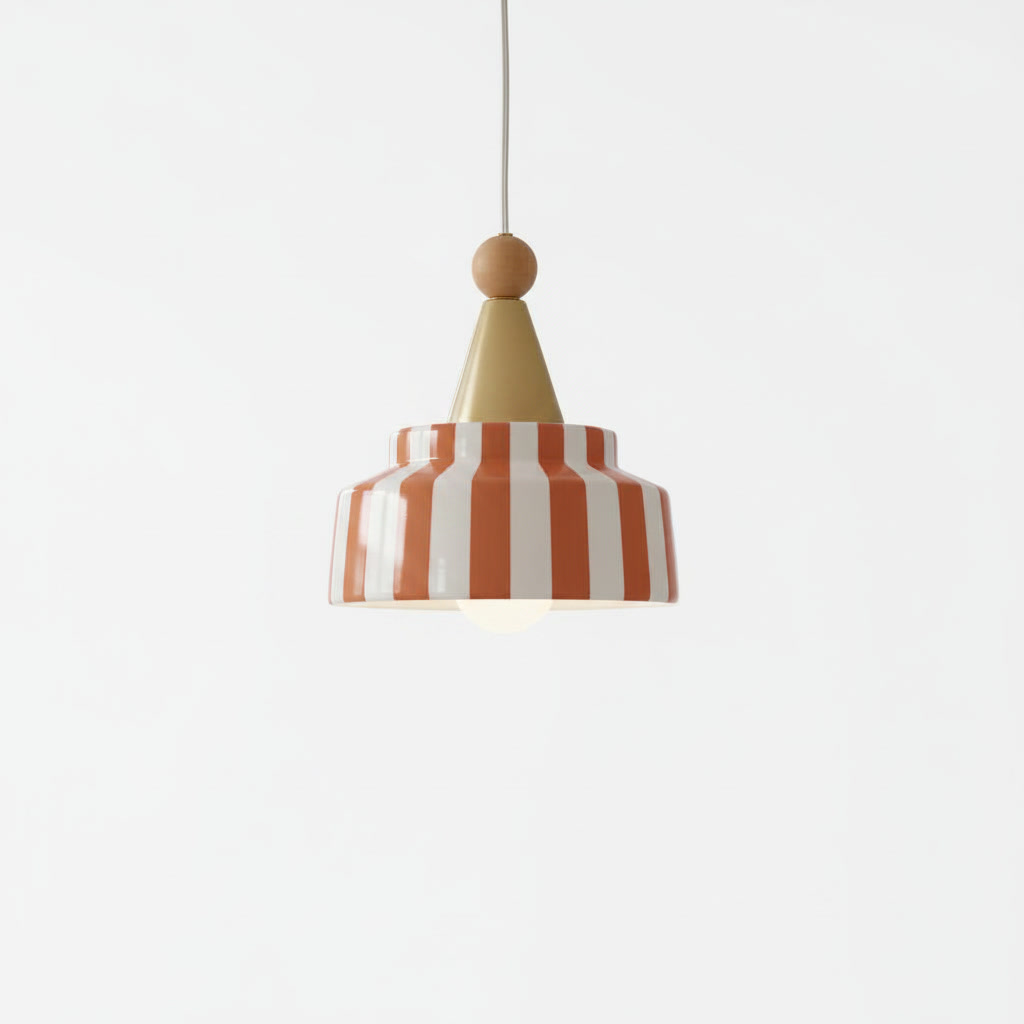
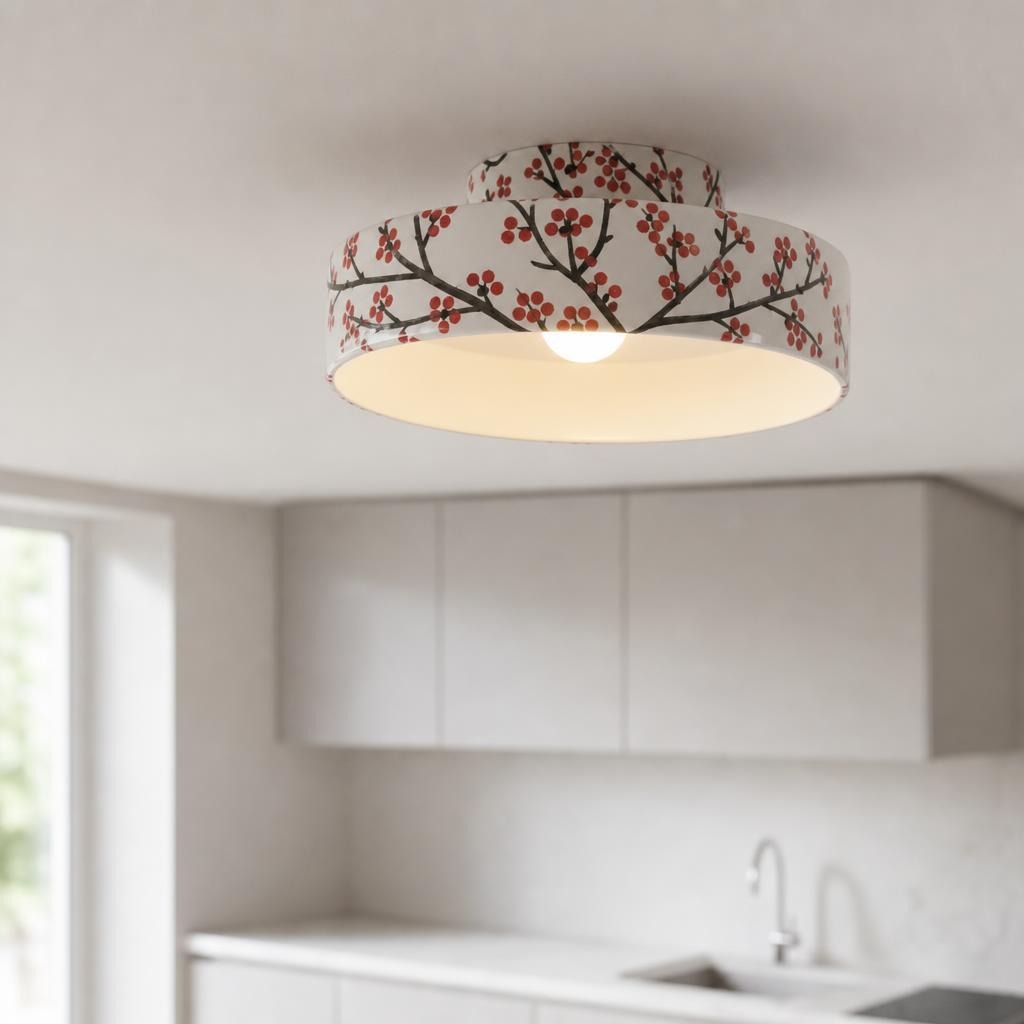
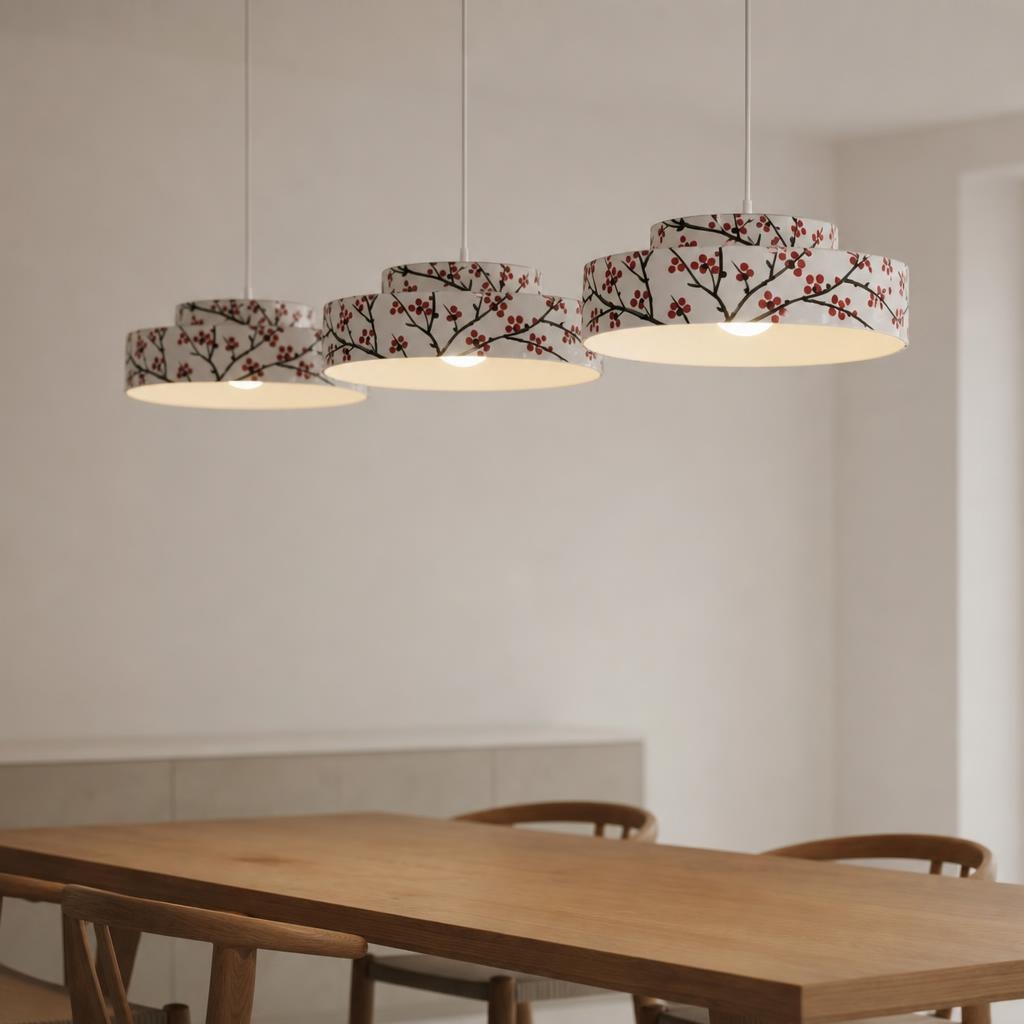
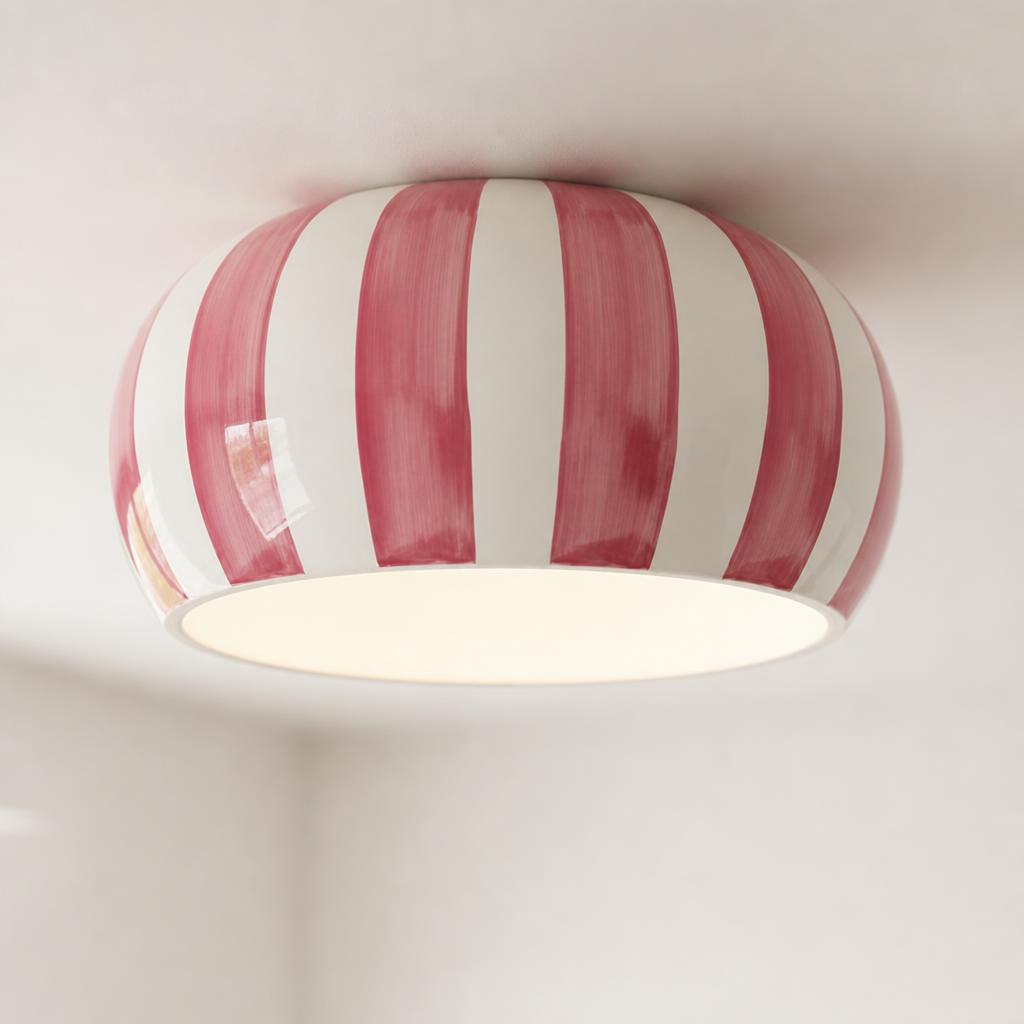
Orange Striped Ceramic Flush Mount Ceiling Light
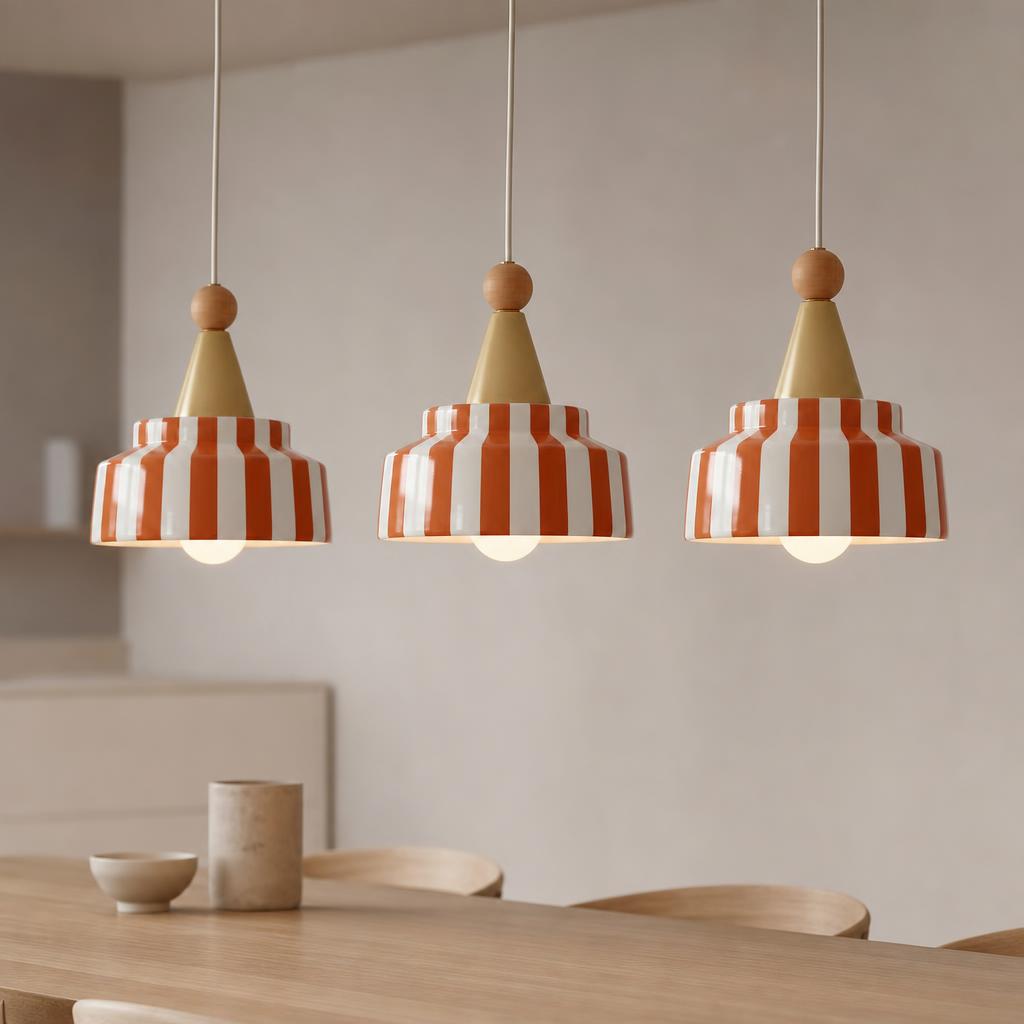
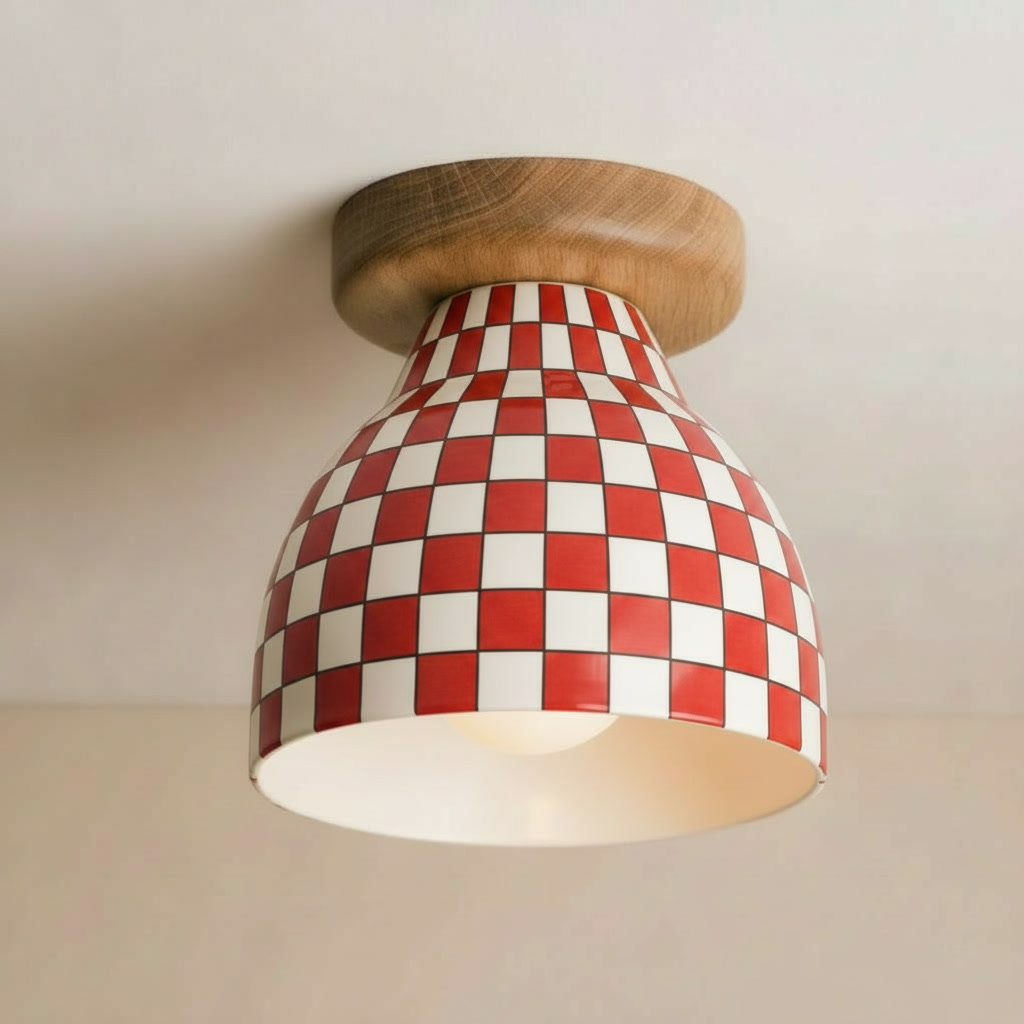
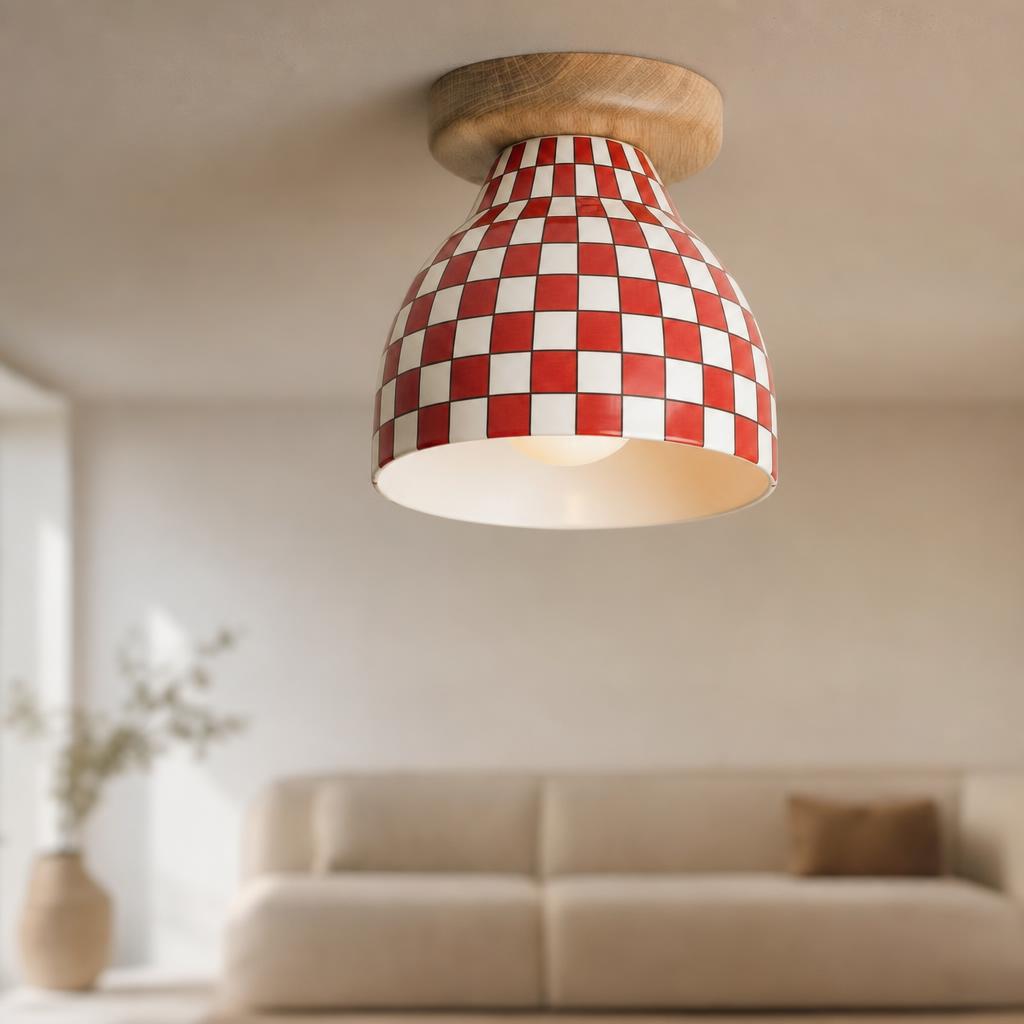
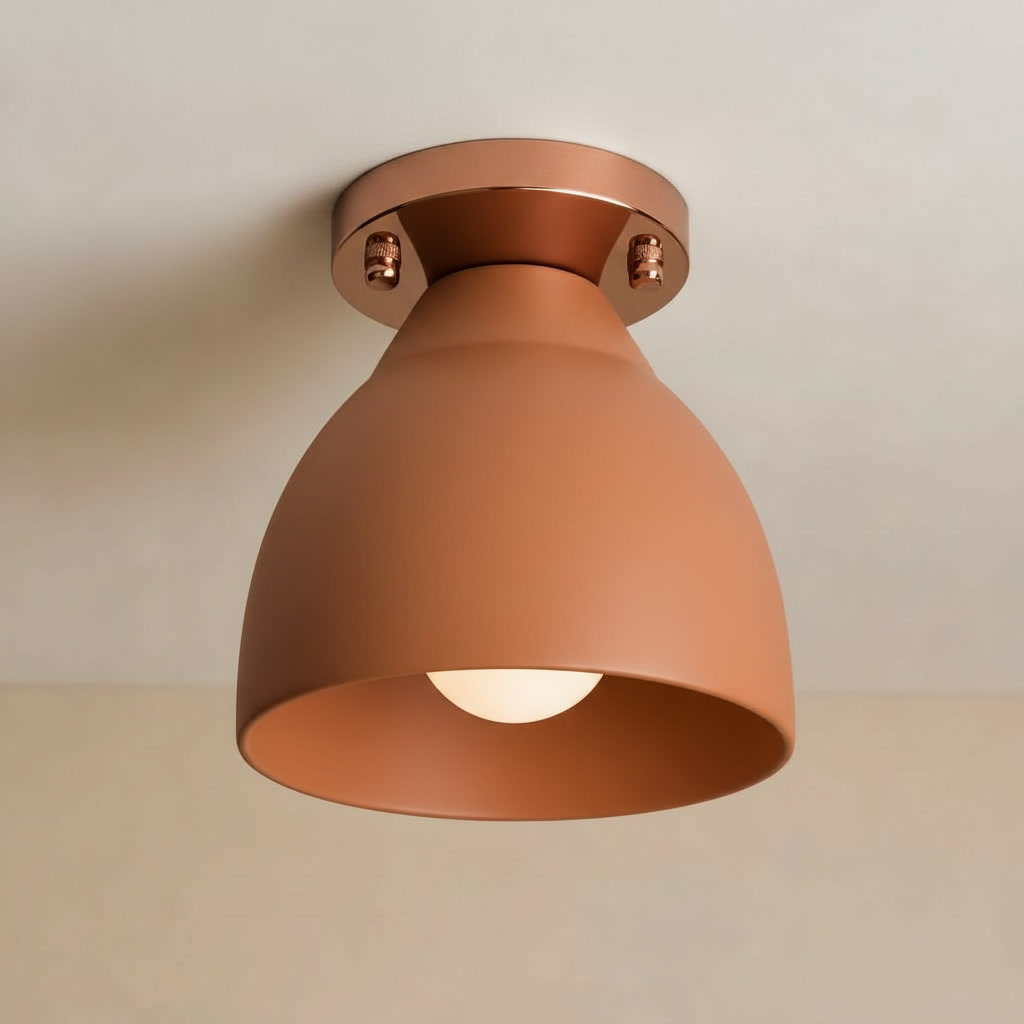
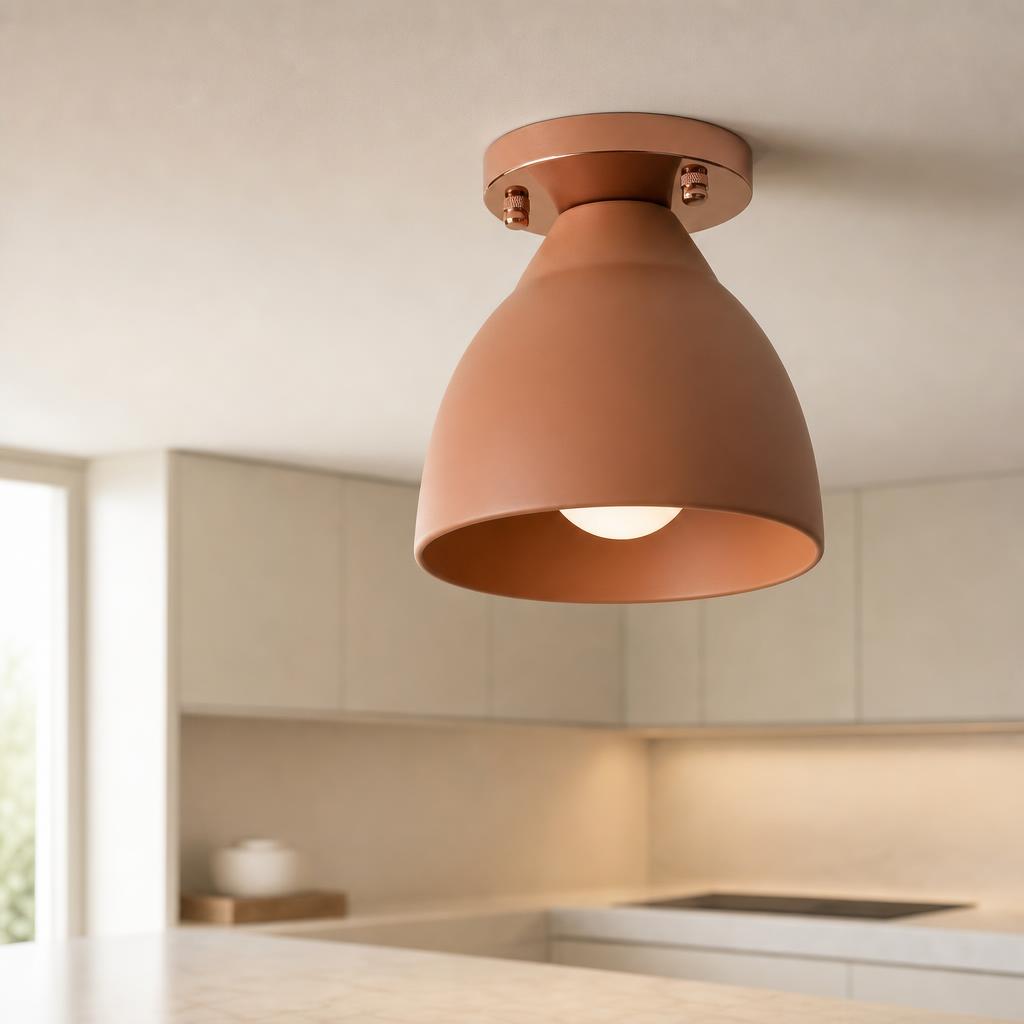
A warm orange striped ceramic flush mount ceiling light with a stepped sculptural shade and graphic vertical pattern. Designed to add color and character overhead while keeping a compact close-to-ceiling profile.
$190.00
Design Highlights
The stripe pattern follows the changing widths of the ceramic shade, turning a compact ceiling light into a clear decorative object without requiring a long suspension.
Materials & Finish
- High-gloss glazed ceramic shade
- Metal mounting / suspension hardware
- Off-white ceramic base
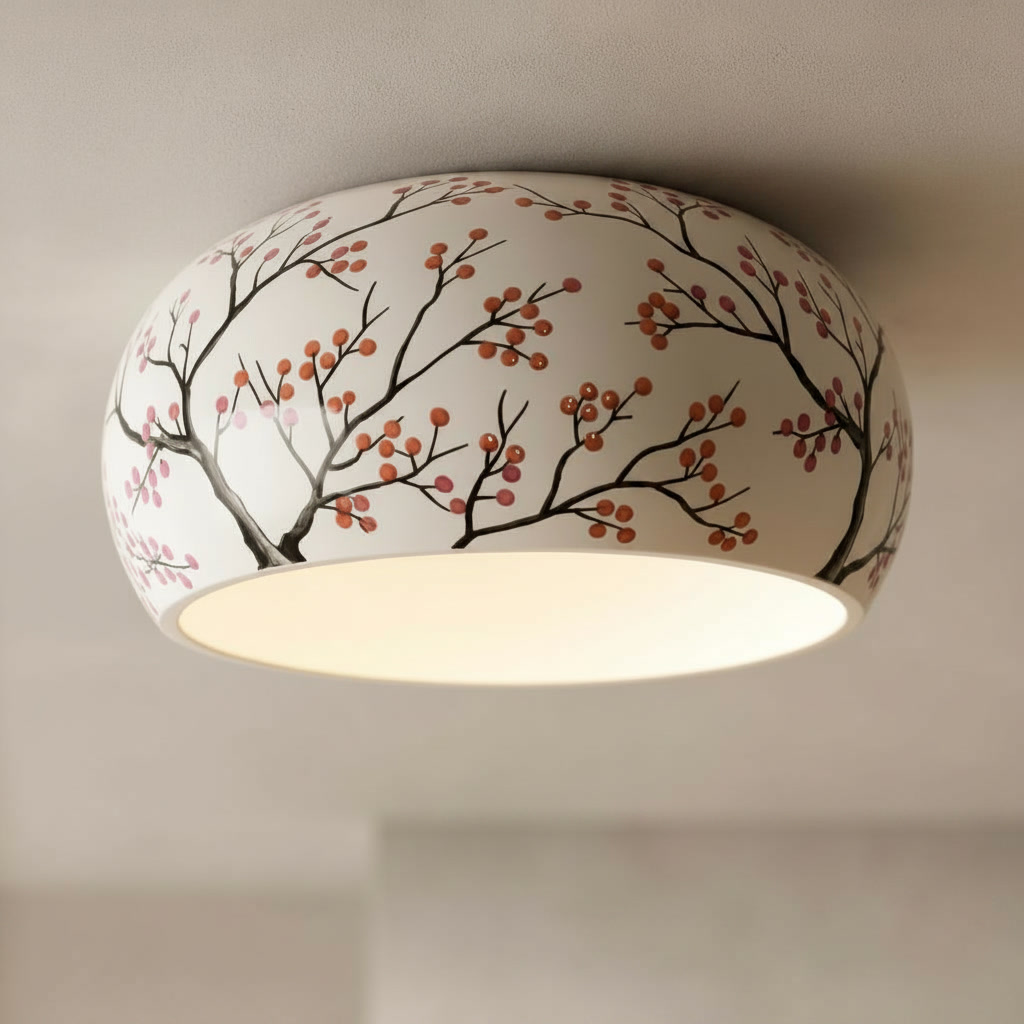
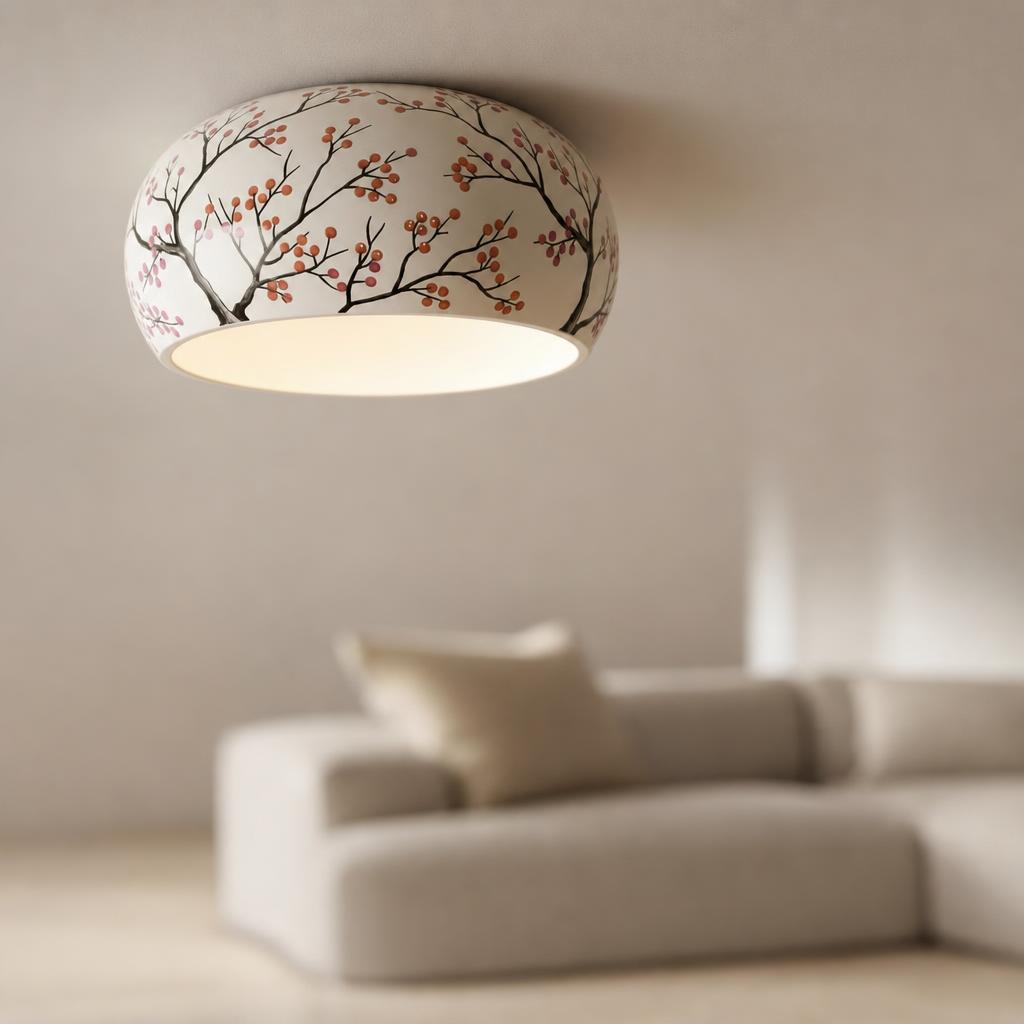
- Soft pink circular accents
- Charcoal botanical linework
- Designed for indoor use
Where It Works Best
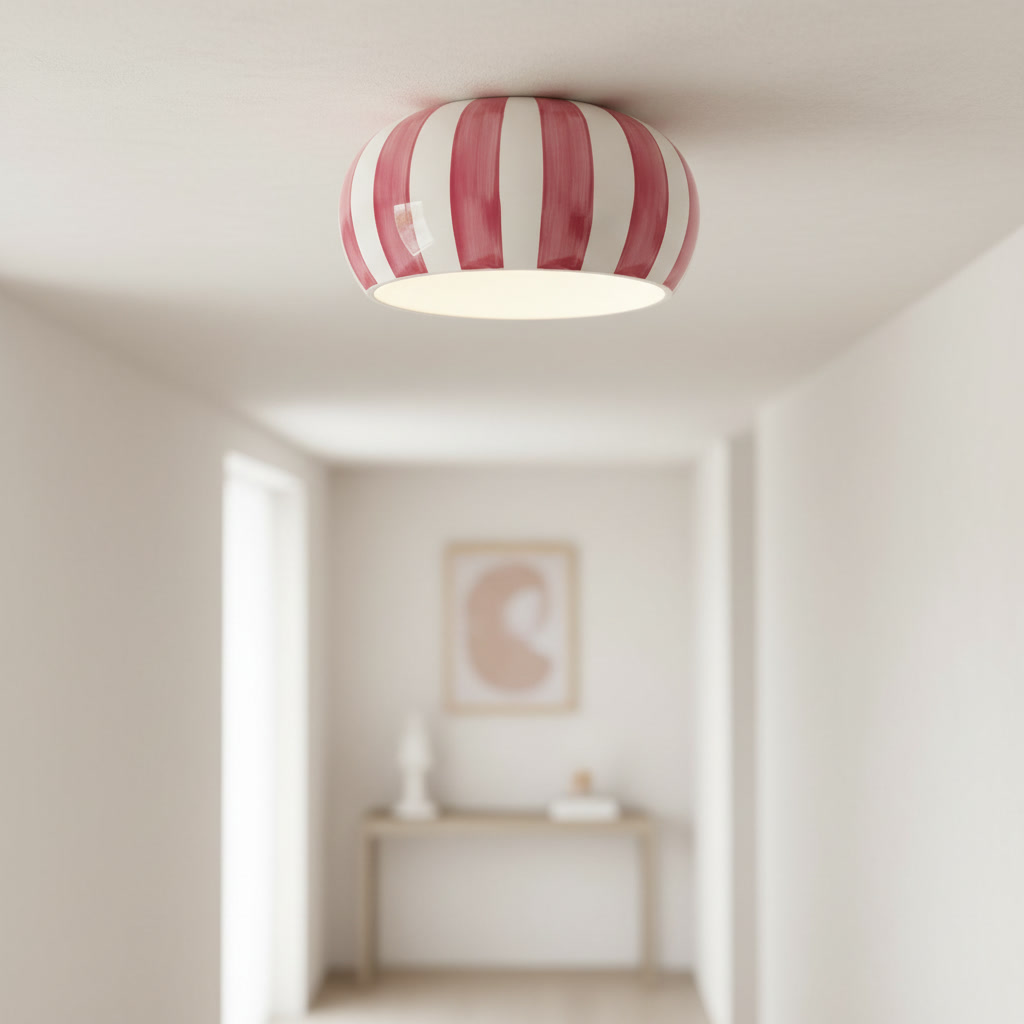
Designed for bedrooms, kitchens, hallways, entryways, compact living spaces and rooms with lower visual profiles.
Product Details
Type: Flush Mount Ceiling Light
Main Material: Ceramic
Visible Color Palette: warm orange and soft white vertical stripes
Design: a close-to-ceiling stepped ceramic shade with a rounded lower body and narrower upper section
Style: retro-influenced, playful, graphic and contemporary
Use: Indoor
Collection: Ceramic Pendant Lights
Art Ceramic protections
- Secure payments
- Data privacy
- Money-back guarantee
- Delivery guarantee
- 24/7 support
- Easy returns and refunds
Orange Striped Ceramic Flush Mount Ceiling Light
Decorative lighting can shape a room long before the light is switched on. This striped ceramic flush mount is designed around that idea, combining ceramic form, a clearly defined color palette and a silhouette that remains visible as part of the interior throughout the day.
The design is built around a close-to-ceiling stepped ceramic shade with a rounded lower body and narrower upper section. Its visible palette uses warm orange and soft white vertical stripes, creating a fixture that can work as a focal point or as a controlled accent depending on the surrounding materials.
The stripe pattern follows the changing widths of the ceramic shade, turning a compact ceiling light into a clear decorative object without requiring a long suspension.
Rather than treating lighting as a purely technical object, this piece uses the ceramic body itself as decoration. The shape, surface and color all contribute to the room, while the light adds another atmospheric layer after dark.
Design Highlights
The stripe pattern follows the changing widths of the ceramic shade, turning a compact ceiling light into a clear decorative object without requiring a long suspension.
The silhouette is intentionally easy to read from across the room. It does not depend on excessive ornament or unnecessary complexity. Instead, proportion, ceramic surface and color create the identity of the fixture.
This approach makes the design useful in contemporary interiors where a single expressive object can carry more visual weight than several smaller accessories.
Ceramic Form and Surface
Ceramic is particularly effective in decorative lighting because it can carry shape and surface detail at the same time. Curves, stepped sections, painted areas and glaze all react differently to daylight and artificial light, giving the fixture more visual depth than a flat painted object.
On this flush mount ceiling light, the ceramic body creates a clear physical presence. Even when the room is bright and the lamp is not illuminated, the fixture continues to contribute color and sculptural form.
The visible finish also helps connect the light with other tactile materials such as timber, stone, plaster, linen, wool, woven surfaces and additional ceramic objects.
Color as Part of the Architecture
The palette of warm orange and soft white vertical stripes is not simply decorative. Color changes how the silhouette reads against the ceiling or wall and determines whether the fixture feels quiet, graphic, warm or more expressive.
In a restrained room, the light can become the main color accent. In a more layered interior, one or two colors from the fixture can be repeated subtly through artwork, textiles or smaller decorative objects.
There is no need to match every tone. A small visual connection is usually enough to make the lighting feel integrated rather than isolated.
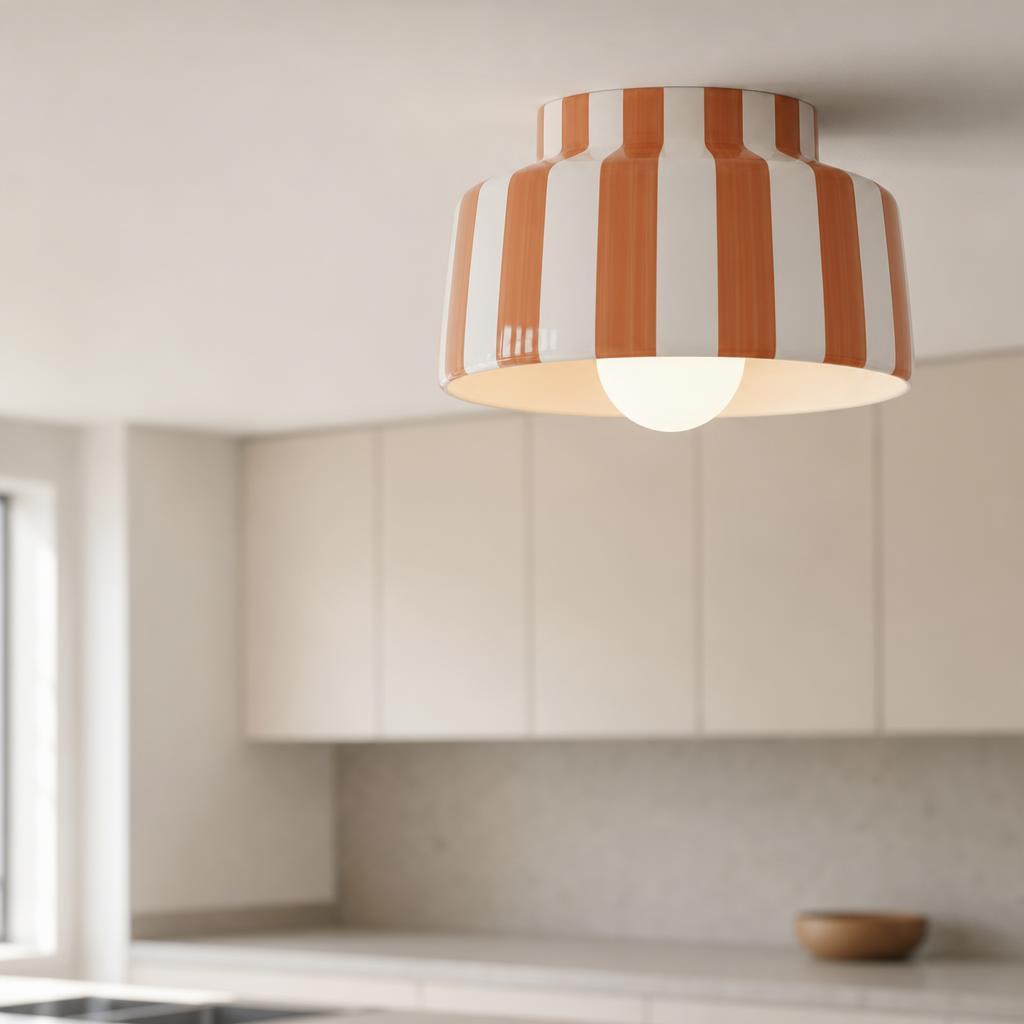
A Flush Mount Ceiling Light for Kitchen Island Or Breakfast Counter
Kitchen Island Or Breakfast Counter is one of the strongest places to use a design with this much visual character. The fixture can help define the immediate zone while introducing ceramic texture at a different height from furniture and accessories.
Keep surrounding surfaces relatively calm if you want the light to remain the main focal point. Natural wood, warm white, beige, stone, soft grey and simple painted finishes can all provide a useful backdrop.
If the space already contains stronger materials or color, use one element from the fixture as the bridge rather than repeating the full palette.
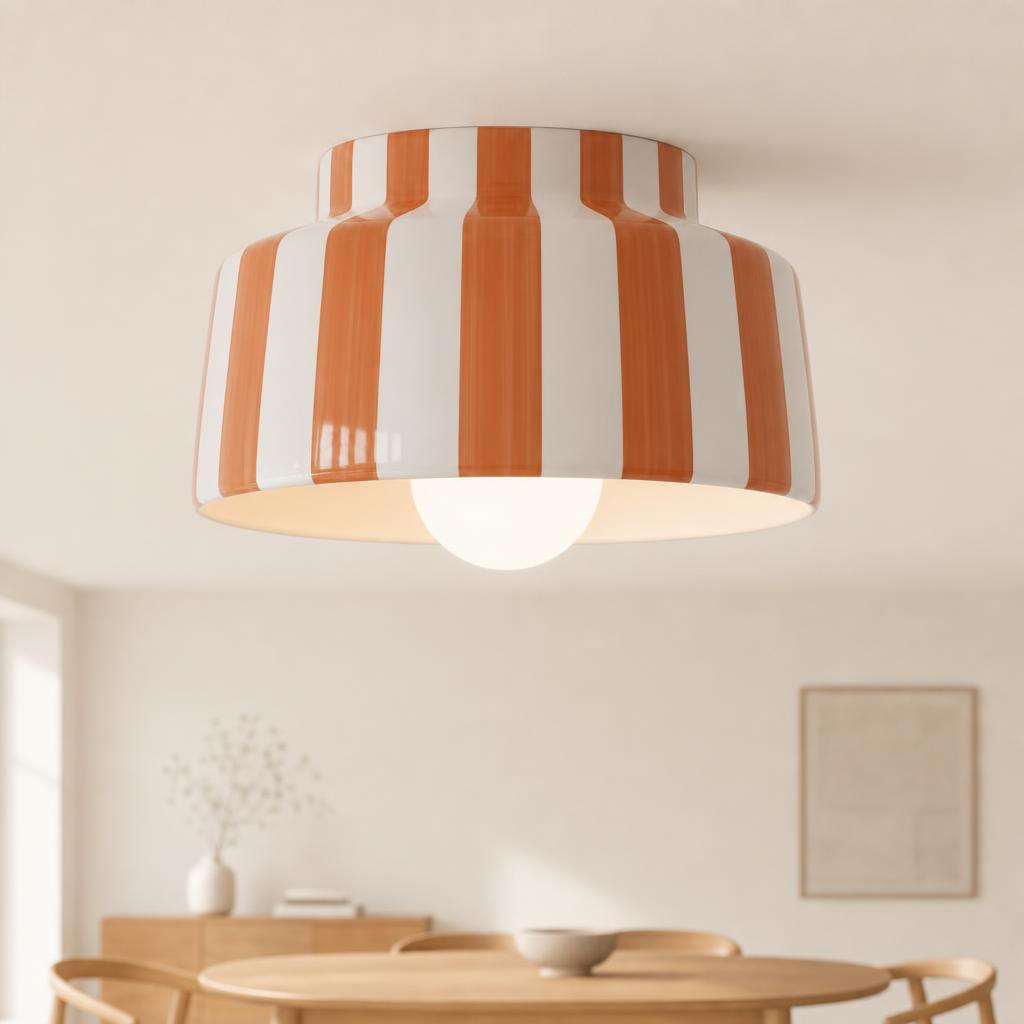
Using It in the Dining Room
In the dining room, decorative lighting becomes part of the room's main composition. A ceramic fixture can bring more personality than a generic metal or glass light because the body itself behaves like an interior object.
Pair the piece with simple furniture shapes and allow enough visual breathing room around it. This keeps the ceramic silhouette readable and prevents the surrounding arrangement from feeling crowded.
Warm timber, linen, stone, plaster and restrained artwork can support the fixture without competing with its color and shape.
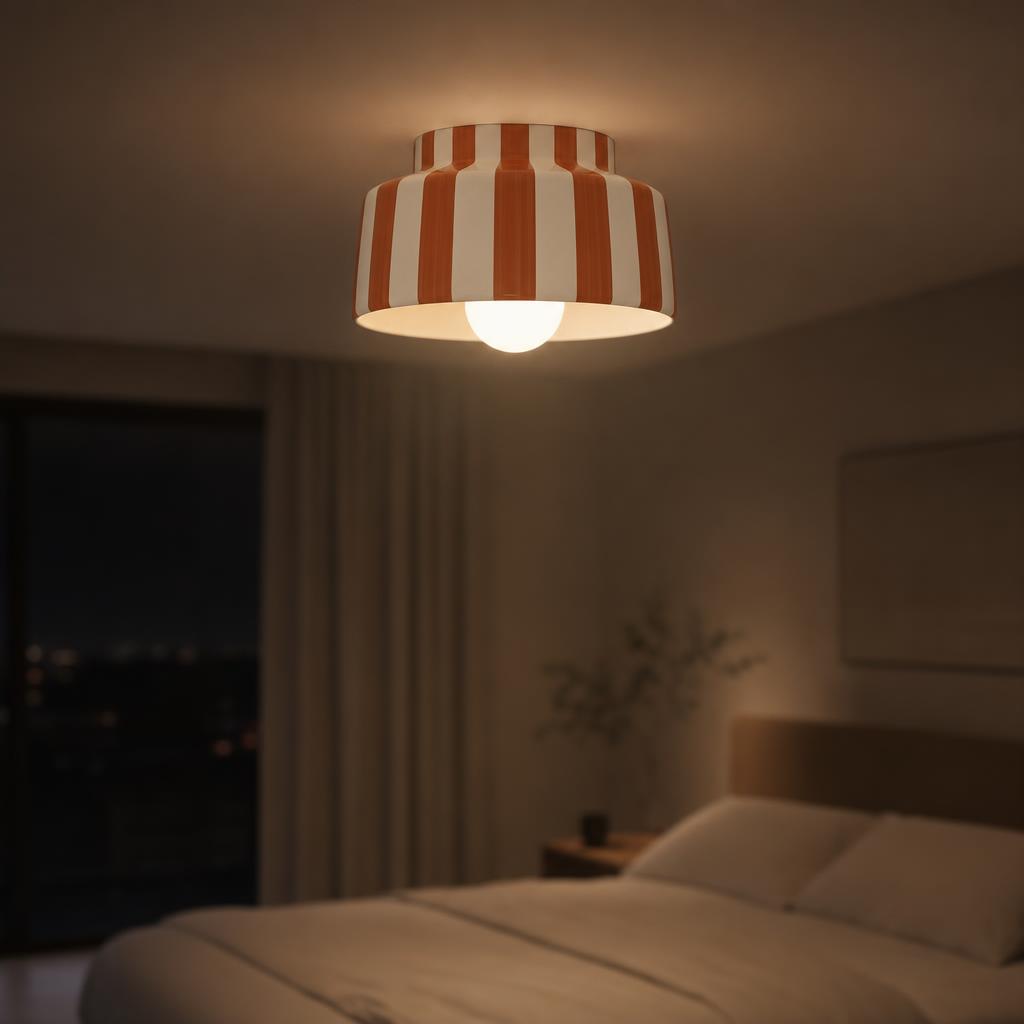
A Decorative Choice for the Bedroom
The bedroom often benefits from lighting that feels softer and more personal than purely functional fixtures. This design can introduce shape and color while allowing the larger surfaces of the room to remain calm.
Neutral bedding, warm wood, textured fabrics and simple wall colors can make an effective setting. If the fixture contains a stronger tone, repeat it only in a small detail such as artwork, a cushion or another ceramic object.
The result can feel collected and intentional without turning the room into a strict theme.
Hallway Or Entryway Lighting with More Character
Transitional areas are often treated as purely practical spaces, but decorative lighting can make them feel more considered. A ceramic flush mount ceiling light introduces material and form without requiring additional floor space.
Use it to mark a doorway, create rhythm, frame a visual axis or make a quieter area of the home feel connected to the main interior palette.
Because the ceramic remains visible during daylight, the fixture adds value even at times when the light itself is not needed.
Styling with Natural Materials
Ceramic works particularly well beside natural and tactile materials. Timber can introduce warmth, stone can provide a quieter architectural surface, linen and wool can soften the composition, and plaster or limewash-style walls can reinforce the material-led character of the room.
When the fixture already contains strong pattern or color, surrounding textures are usually more effective than additional competing prints. A woven rug, a wood table or a stone surface can support the light without making the room visually busy.
This balance is especially useful in retro-influenced, playful, graphic and contemporary interiors, where individual objects are allowed to have personality but still belong to a coherent material palette.
Using Pattern Without Making the Room Busy
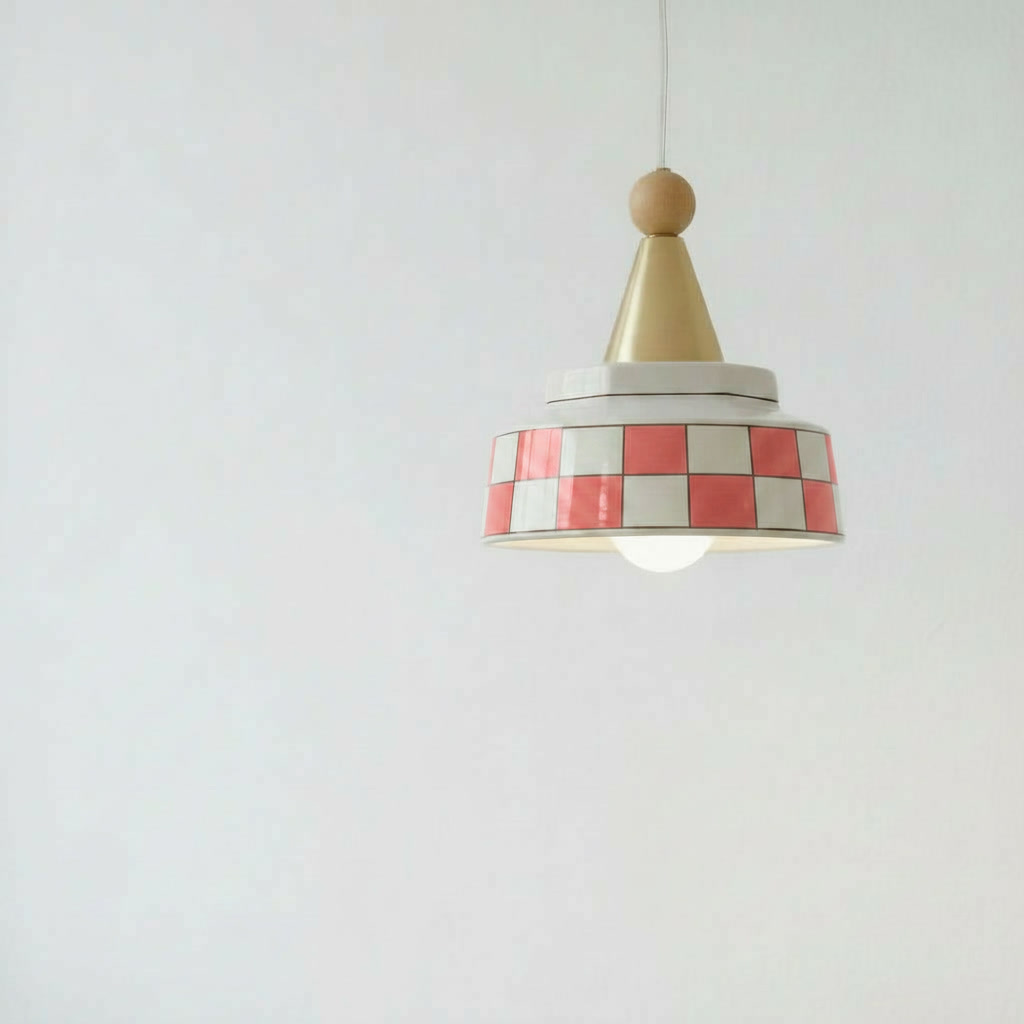
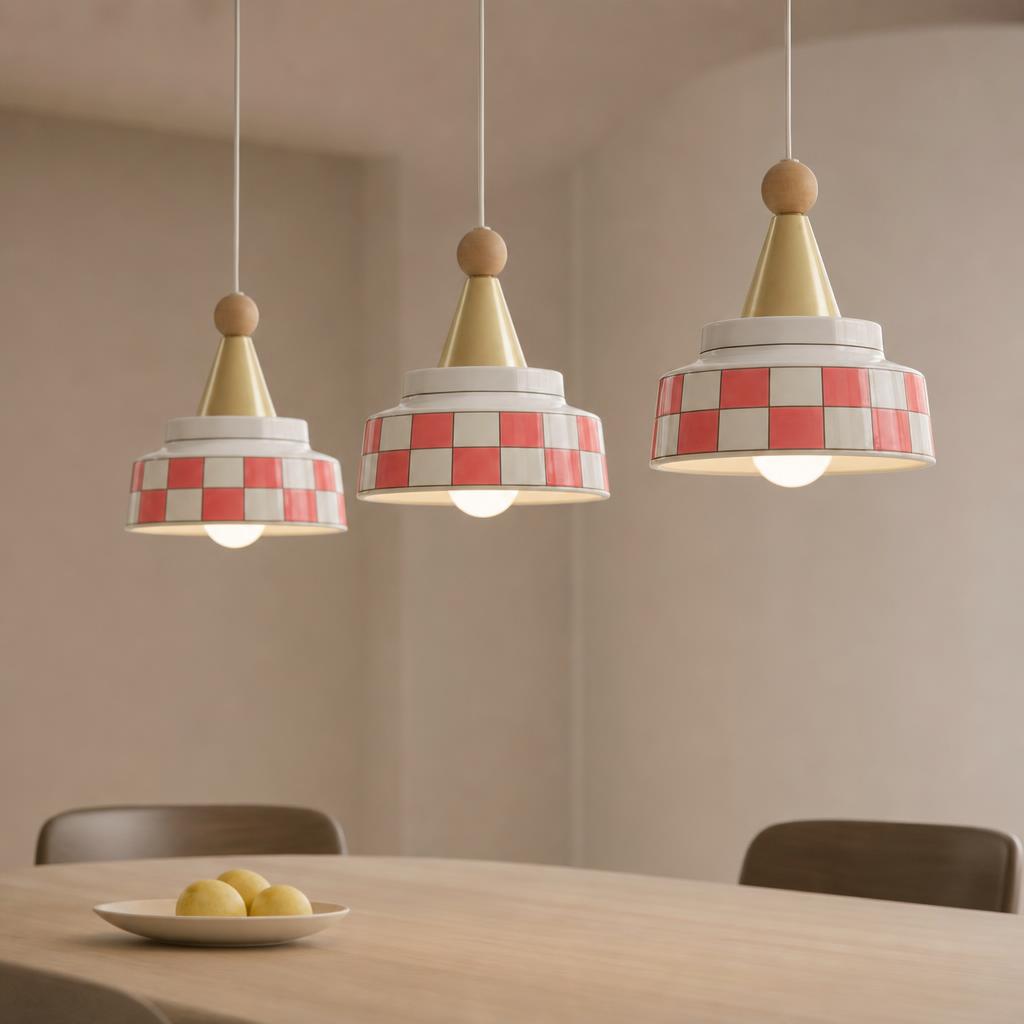
If a fixture includes stripes, checks, botanical linework or another visible surface treatment, it can act as the primary patterned object in the room. The rest of the interior does not need to repeat the same motif.
Instead, connect the light through color, material or proportion. A small accent in artwork or upholstery can be enough. This keeps the room layered while allowing the ceramic pattern to remain clear.
Where the fixture is monochrome, the same principle applies in reverse: use texture and material variation around it so the room does not become visually flat.
A Decorative Object in Daylight
One of the advantages of ceramic lighting is that its visual role does not disappear during the day. Natural light moves across the surface, revealing curves, edges, glaze and differences in color.
The fixture therefore works in two modes. In daylight it behaves like a sculptural ceramic object. After dark it becomes part of the lighting atmosphere while retaining the same material identity.
This day-to-night presence is particularly useful in rooms where every object is expected to contribute to both function and decoration.
Layered Lighting Throughout the Interior
A comfortable interior usually contains several light sources at different heights. Ceiling fixtures provide the upper layer, wall sconces add light around vertical surfaces, and table lamps create lower pools of illumination near furniture.
Repeating ceramic across these levels can create continuity without requiring every fixture to match. A patterned ceiling light can sit comfortably in the same home as a solid-color ceramic table lamp or a sculptural wall sconce.
Explore Ceramic Pendant Lights, Ceramic Table Lamps and Ceramic Wall Sconces to build a more layered Art Ceramic lighting scheme.
How to Build a Balanced Composition Around the Light
Start by deciding whether the fixture should be the strongest visual object in the area or one part of a wider composition. If it is the focal point, keep the surrounding palette quieter. If the room already contains expressive furniture or artwork, use the ceramic light as a supporting element by repeating one shared tone or material.
Consider the view from several directions. Decorative lighting is rarely seen only from directly below or straight ahead. The side profile, the relationship to nearby furniture and the way the fixture reads from an adjoining room can all affect the final composition.
Leaving some visual space around the fixture usually helps its shape remain clear.
Warm Modern Interiors and Ceramic Lighting
Warm modern rooms often combine clean architectural lines with materials that have visible texture and variation. Ceramic fits naturally into that approach because it brings physical character without requiring elaborate ornament.
The fixture can soften spaces dominated by cabinetry, stone, glass or painted surfaces. It can also add structure to more relaxed rooms that use wood, woven materials and layered textiles.
That flexibility is why ceramic lighting can work across contemporary, organic-modern, eclectic and softly retro-influenced interiors.
Product Details
Type: Flush Mount Ceiling Light
Main Material: Ceramic
Visible Color Palette: warm orange and soft white vertical stripes
Design: a close-to-ceiling stepped ceramic shade with a rounded lower body and narrower upper section
Style: retro-influenced, playful, graphic and contemporary
Use: Indoor
Collection: Ceramic Pendant Lights
Where This Design Works Best
This piece is especially well suited to bedrooms, kitchens, hallways, entryways, compact living spaces and rooms with lower visual profiles.
The final placement should always be planned around the actual room, furniture and ceiling or wall conditions. Dimensions, electrical specifications, bulb type and installation hardware are intentionally not stated here because those details were not supplied with the image set and should be confirmed before publication.
Complete the Look with Art Ceramic
Use ceramic fixtures at several heights to create a more complete lighting composition. Pendant and flush-mount lights can define overhead zones, wall sconces can add sculptural interest to vertical surfaces, and table lamps can create smaller pools of light around seating and furniture.
The fixtures do not need to use the same pattern or color. Repeating ceramic as the shared material is often enough to create continuity while allowing each piece to retain its own identity.
Frequently Asked Questions
What is the main visual feature of this flush mount ceiling light?
The stripe pattern follows the changing widths of the ceramic shade, turning a compact ceiling light into a clear decorative object without requiring a long suspension.
What colors are visible in this design?
The current images show warm orange and soft white vertical stripes.
Where can I use this light?
It is intended for indoor decorative lighting and is especially suited to bedrooms, kitchens, hallways, entryways, compact living spaces and rooms with lower visual profiles.
What interior styles work well with it?
The fixture is especially compatible with retro-influenced, playful, graphic and contemporary interiors, and it can also work as a contrasting object inside calmer neutral rooms.
Can I combine it with other ceramic lighting?
Yes. Ceramic pendant lights, wall sconces and table lamps can be layered at different heights while using the material itself as the visual connection.
Are dimensions and electrical specifications included?
No. The supplied image collection does not confirm dimensions, socket type, wattage, voltage or other technical specifications, so those details should be added only after they are verified.

Reviews
Clear filtersThere are no reviews yet.