 Skip to navigation
Skip to main content



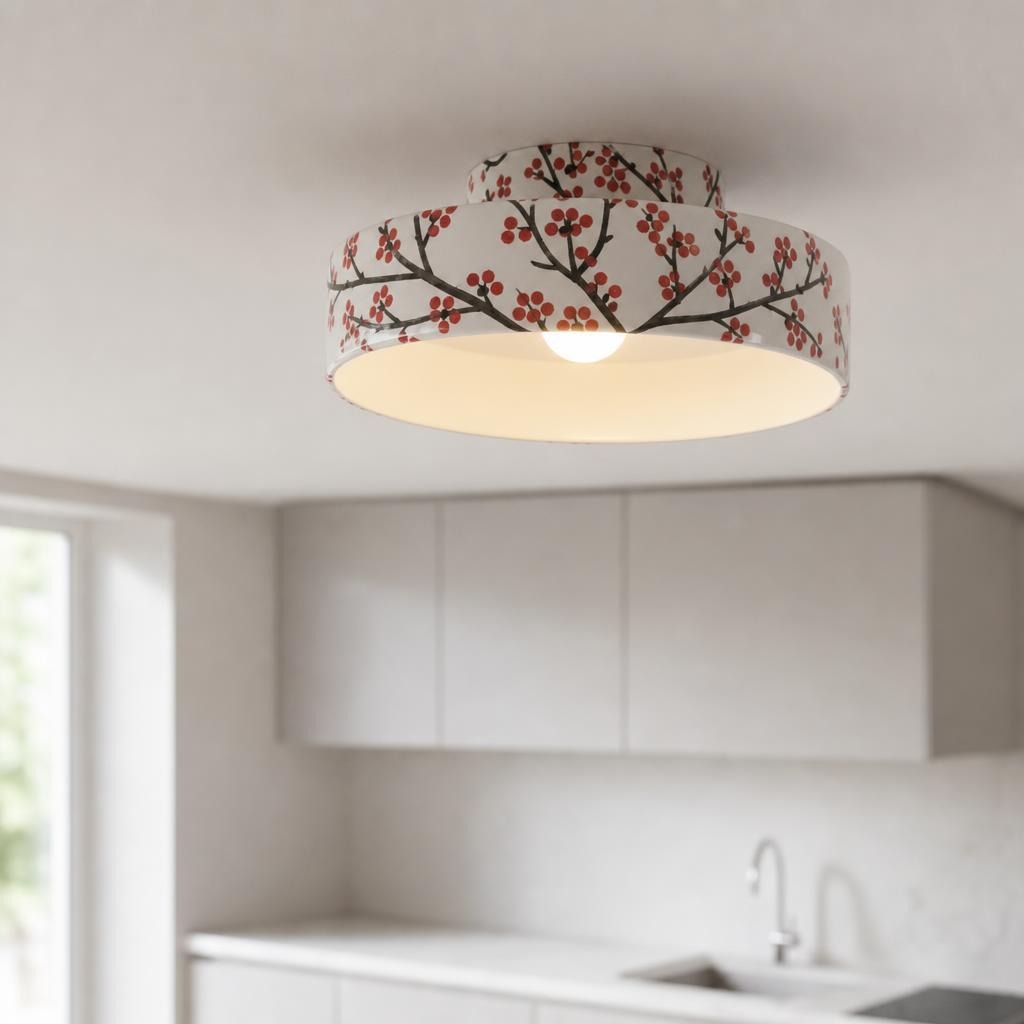
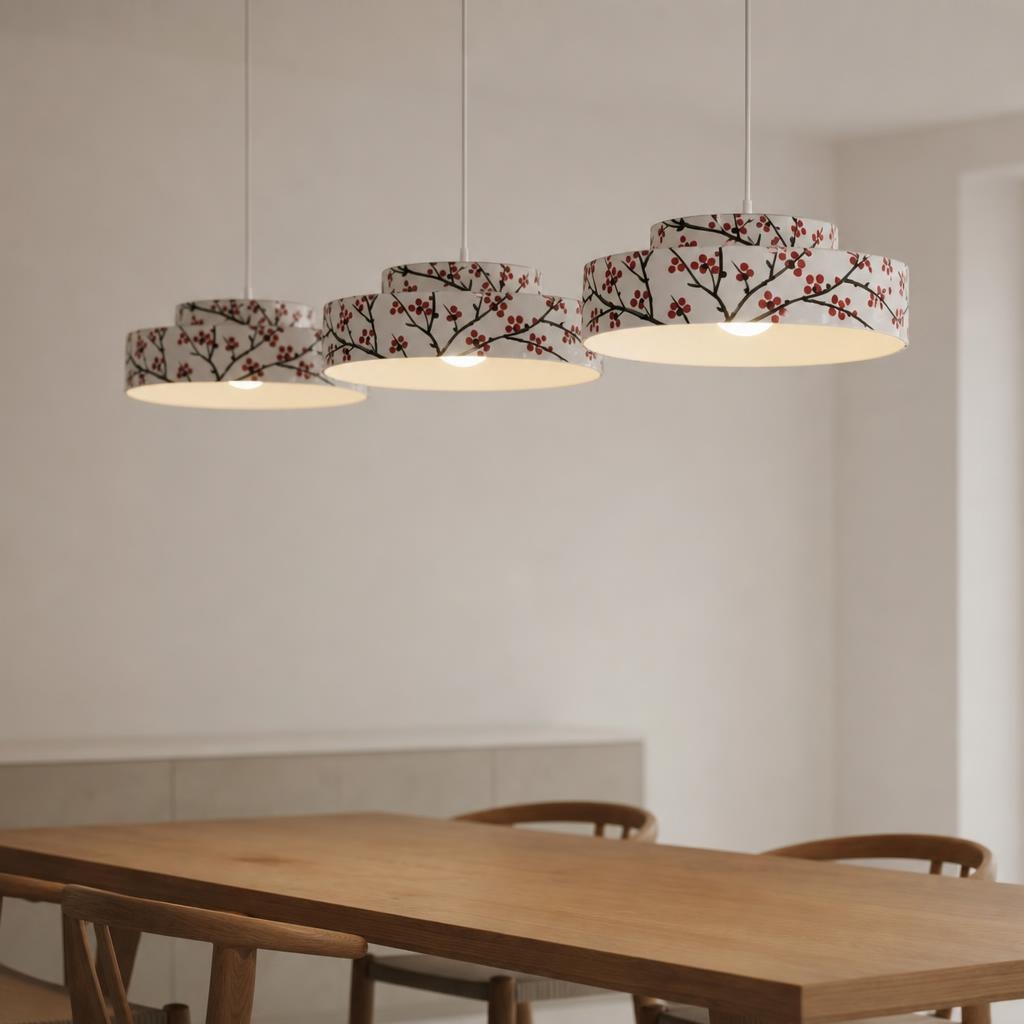
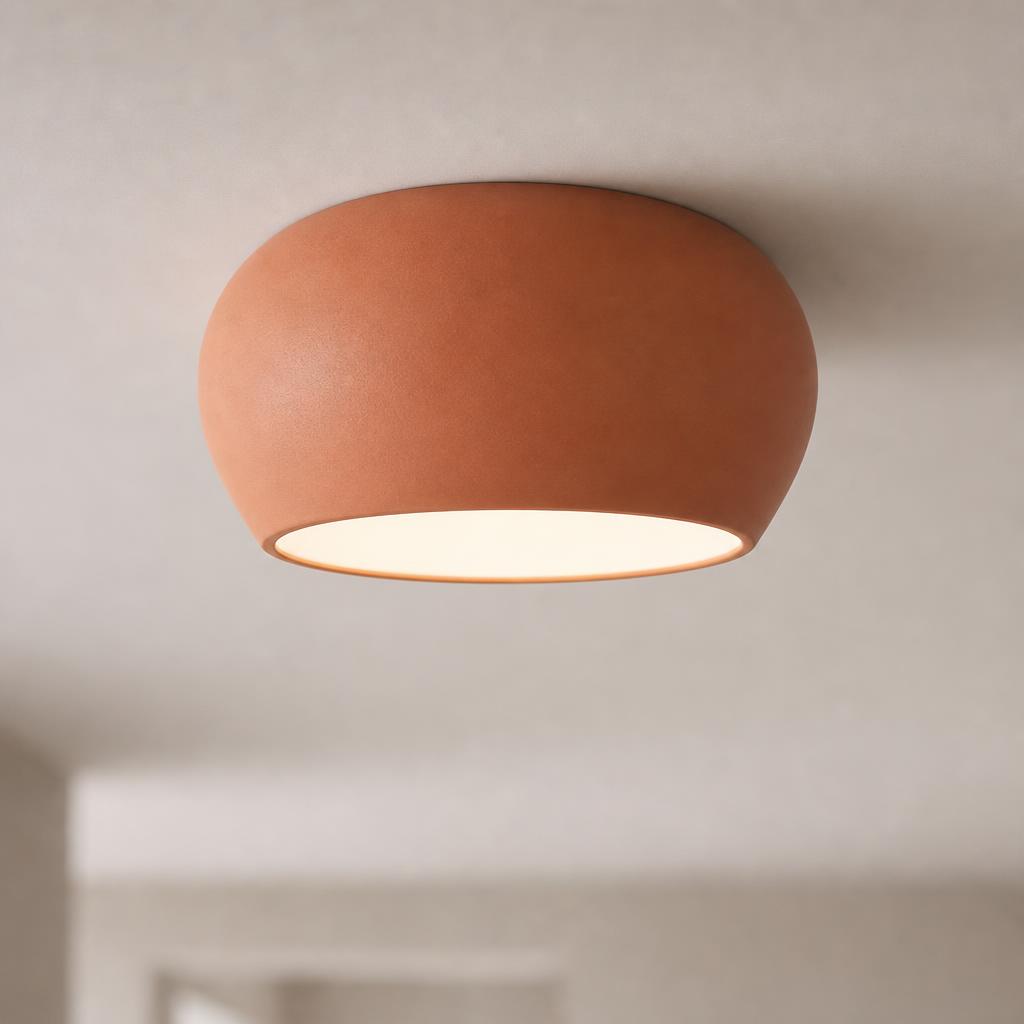
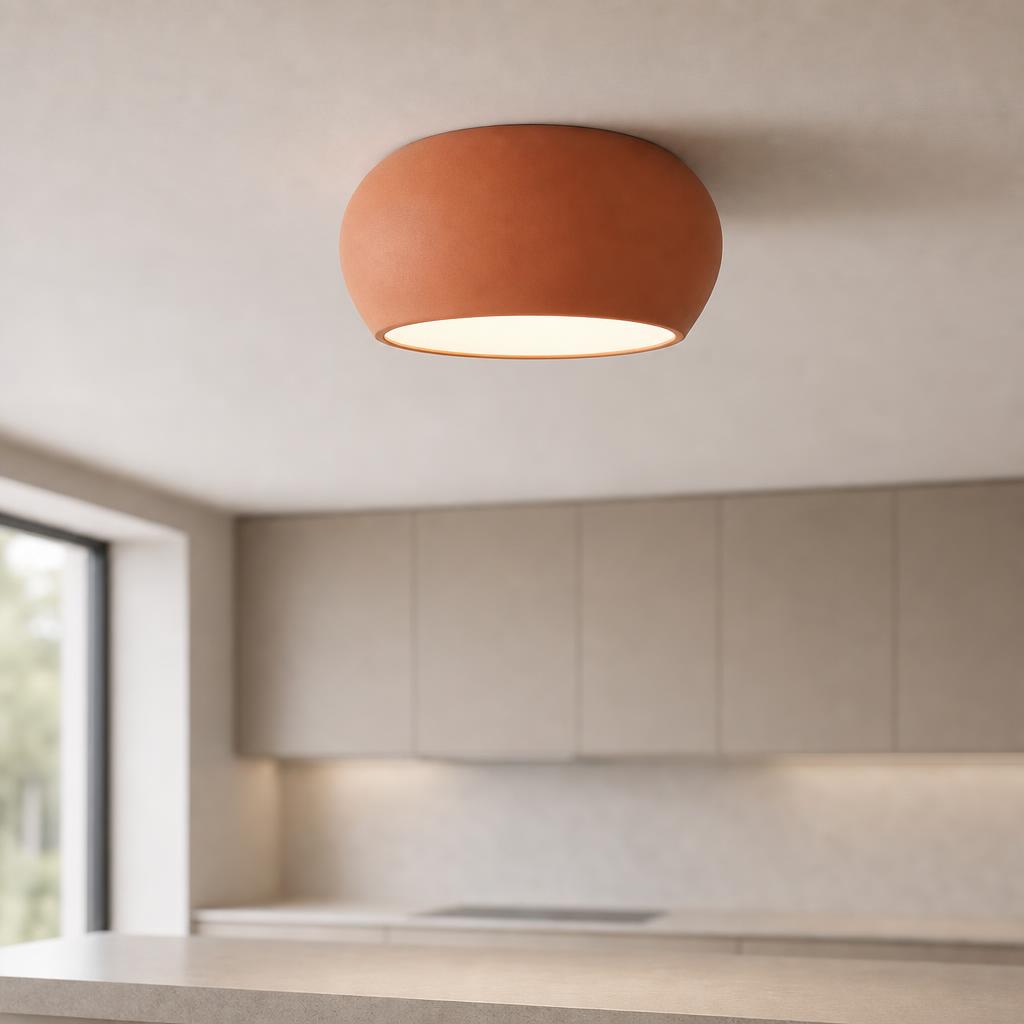
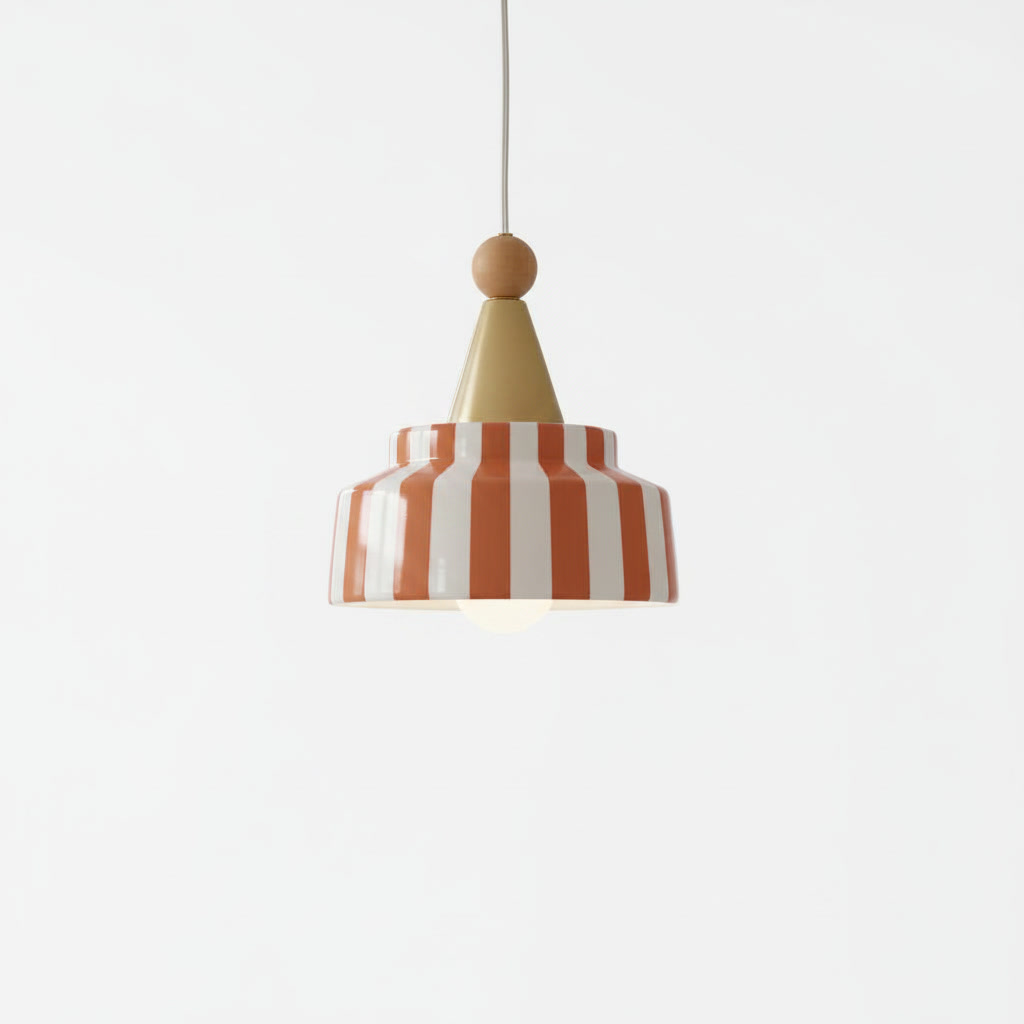
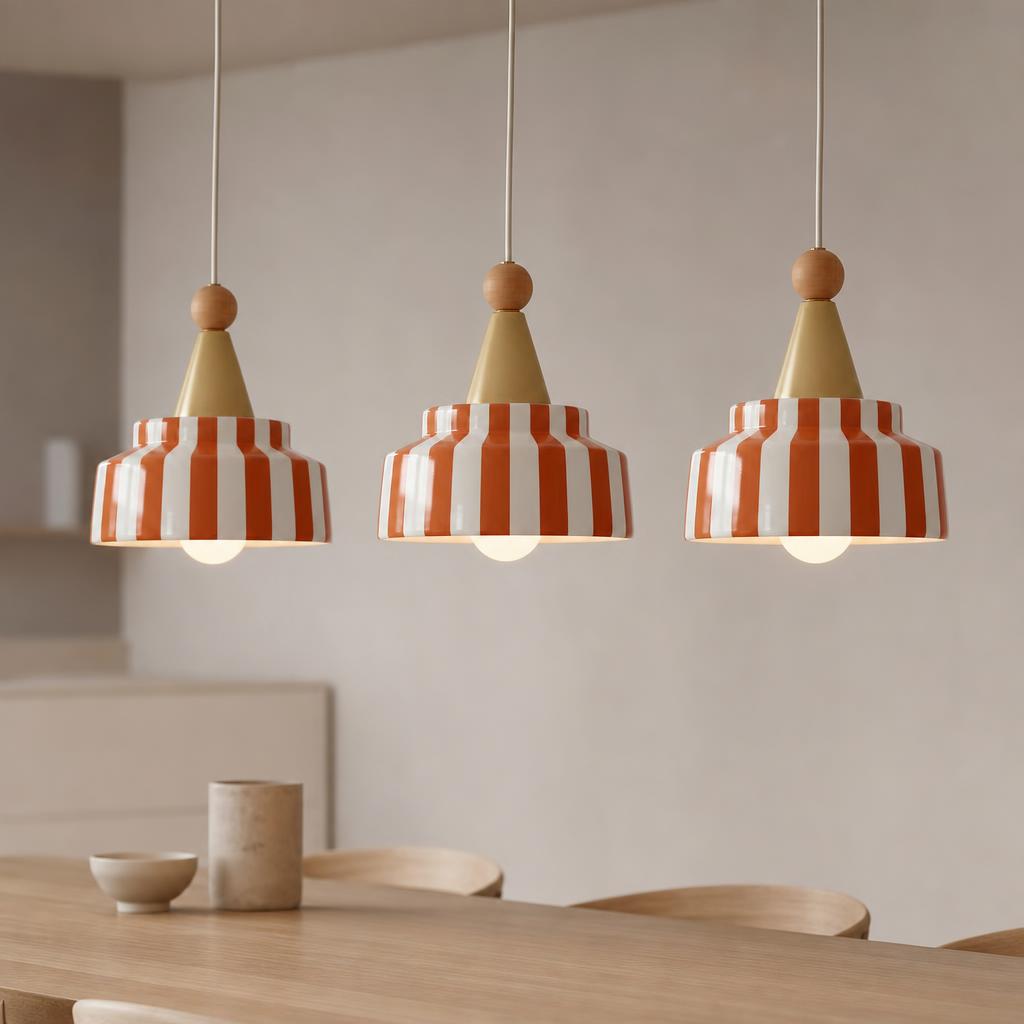
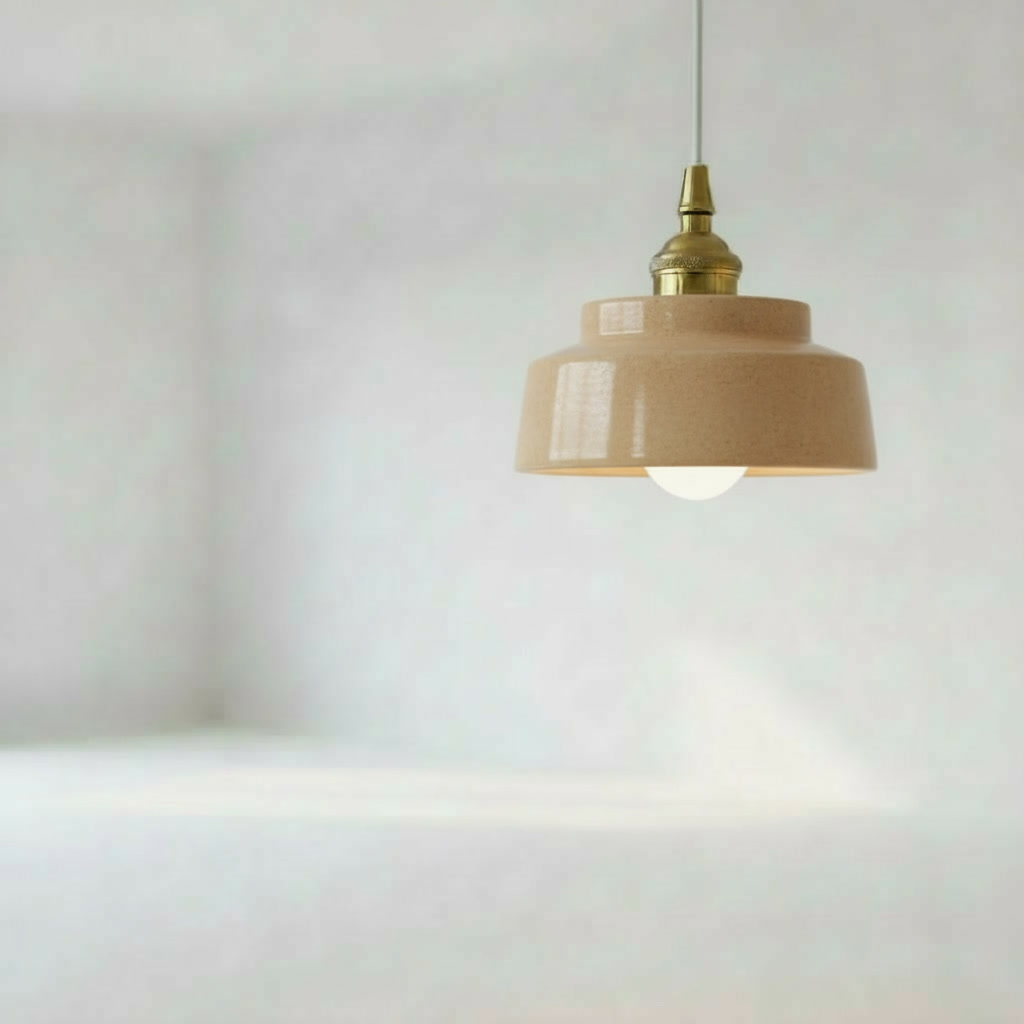
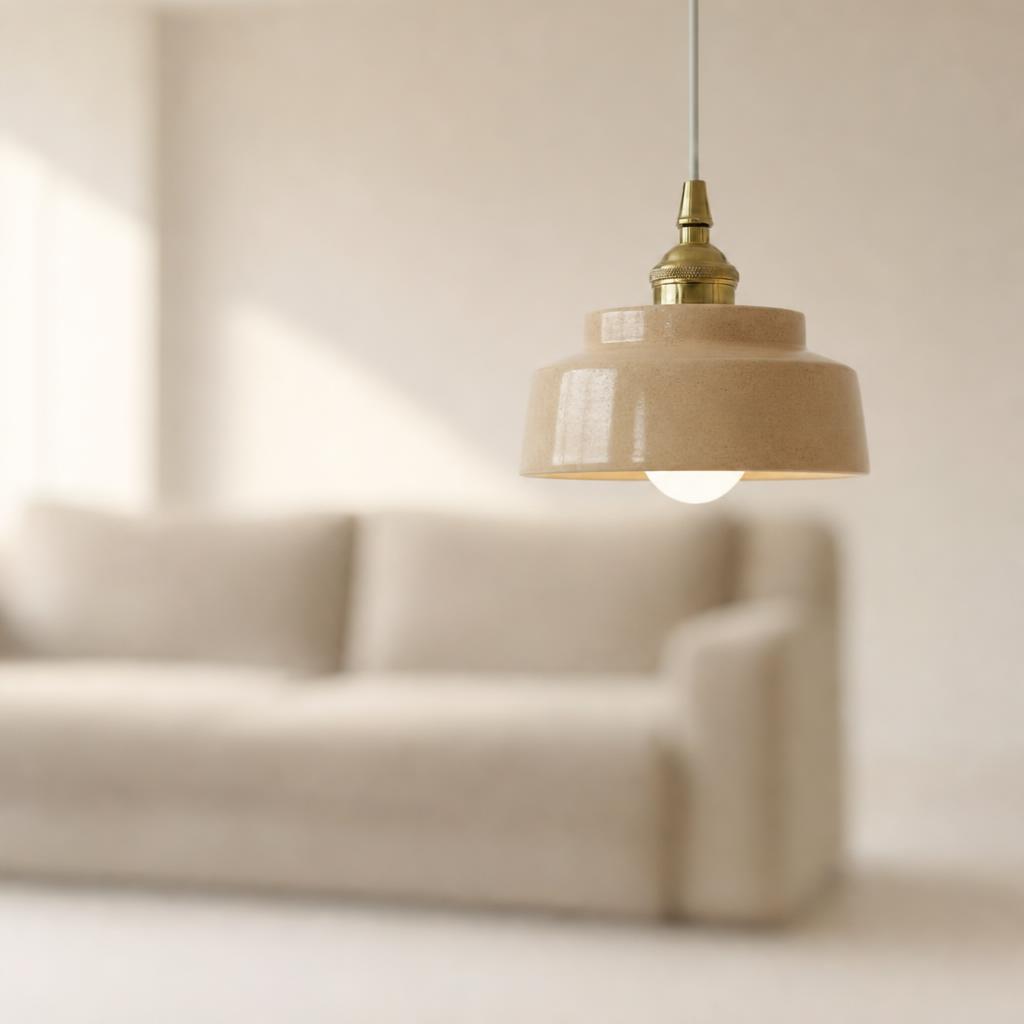
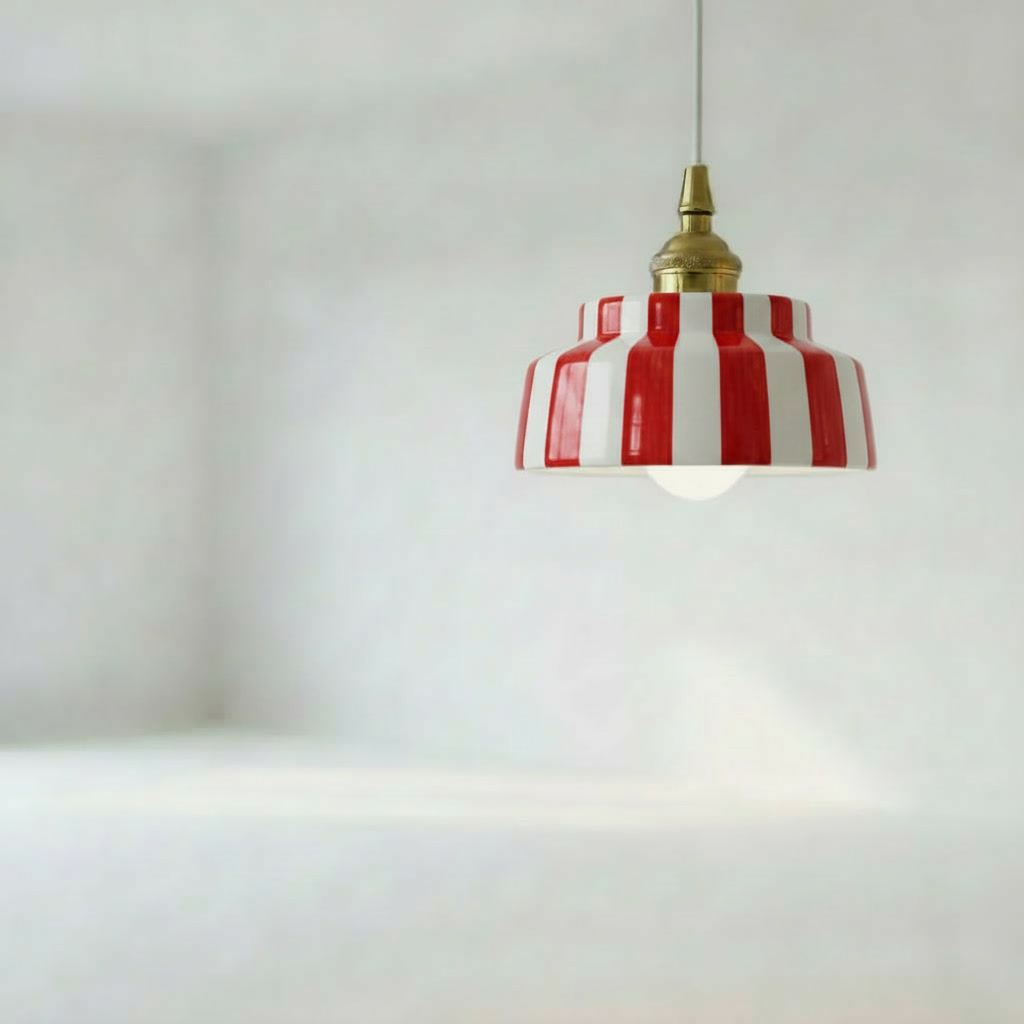
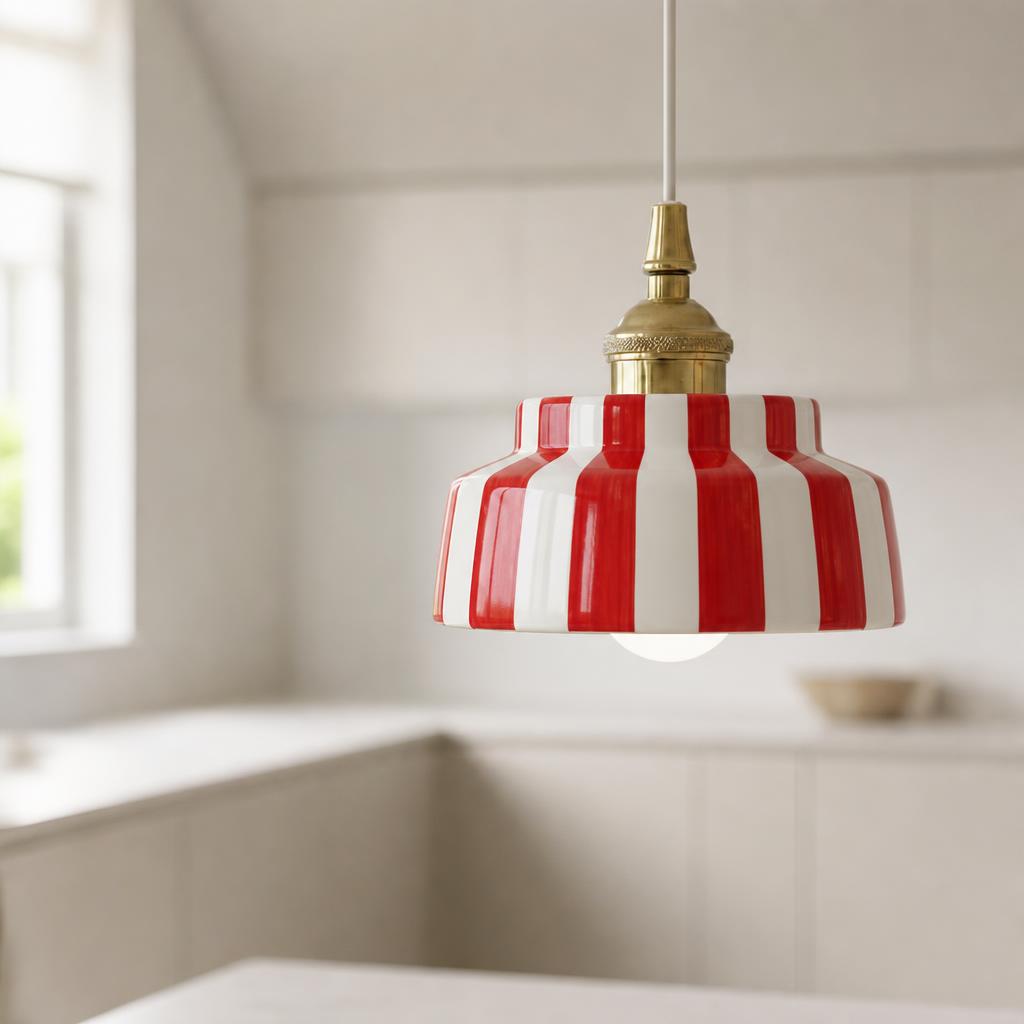
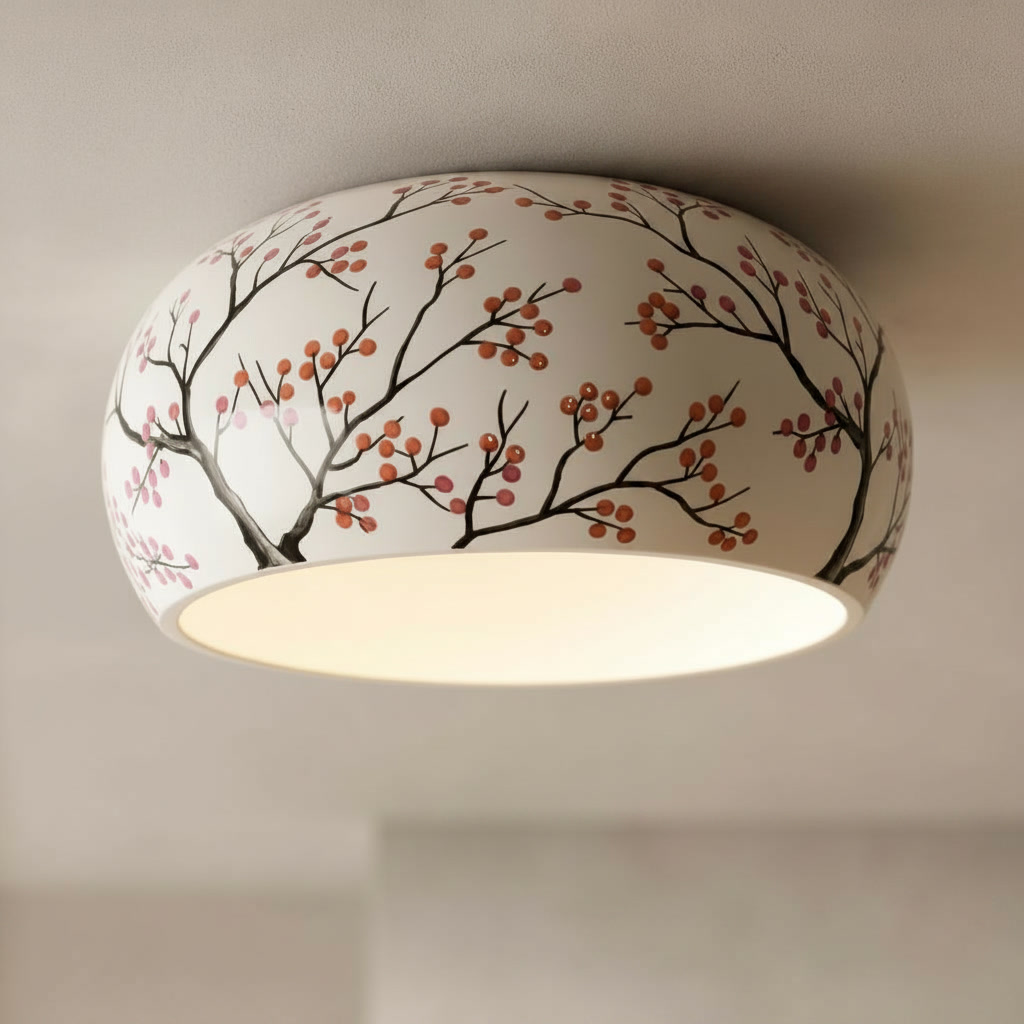
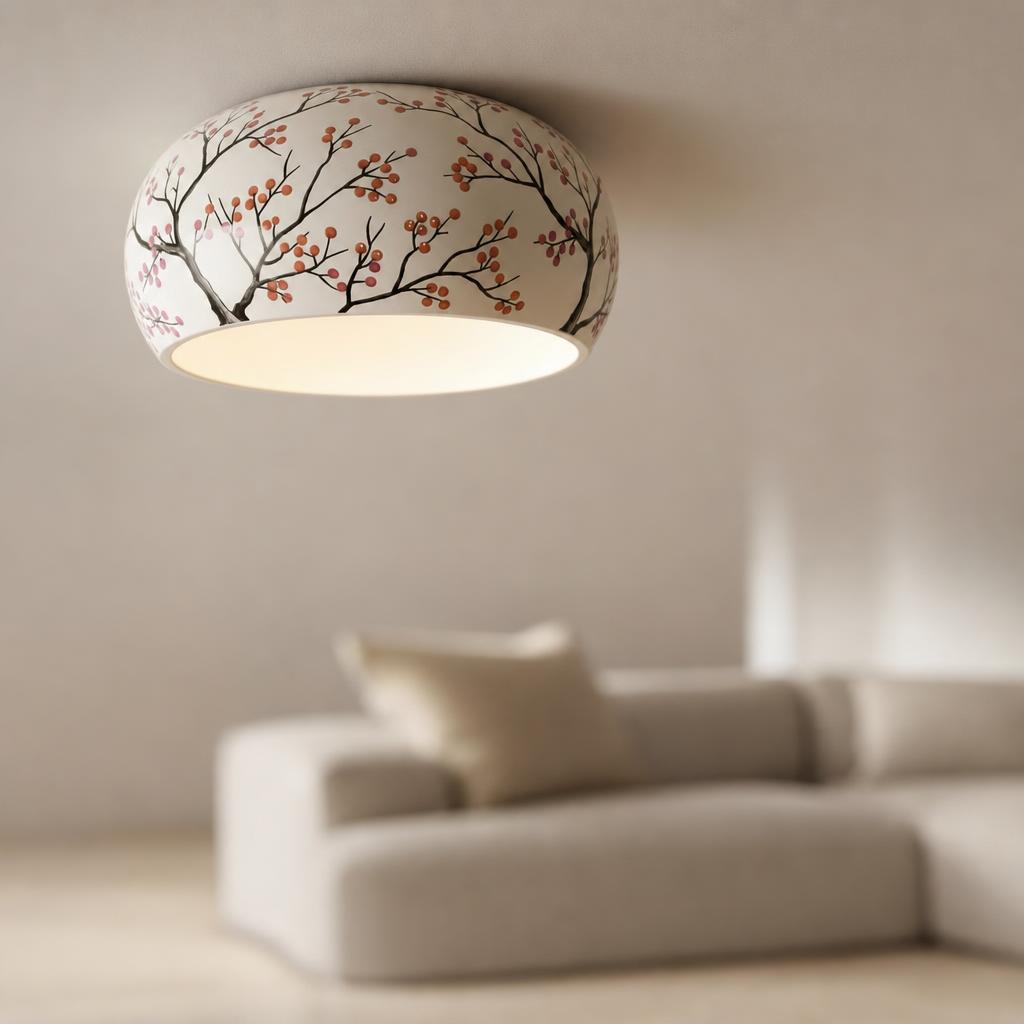
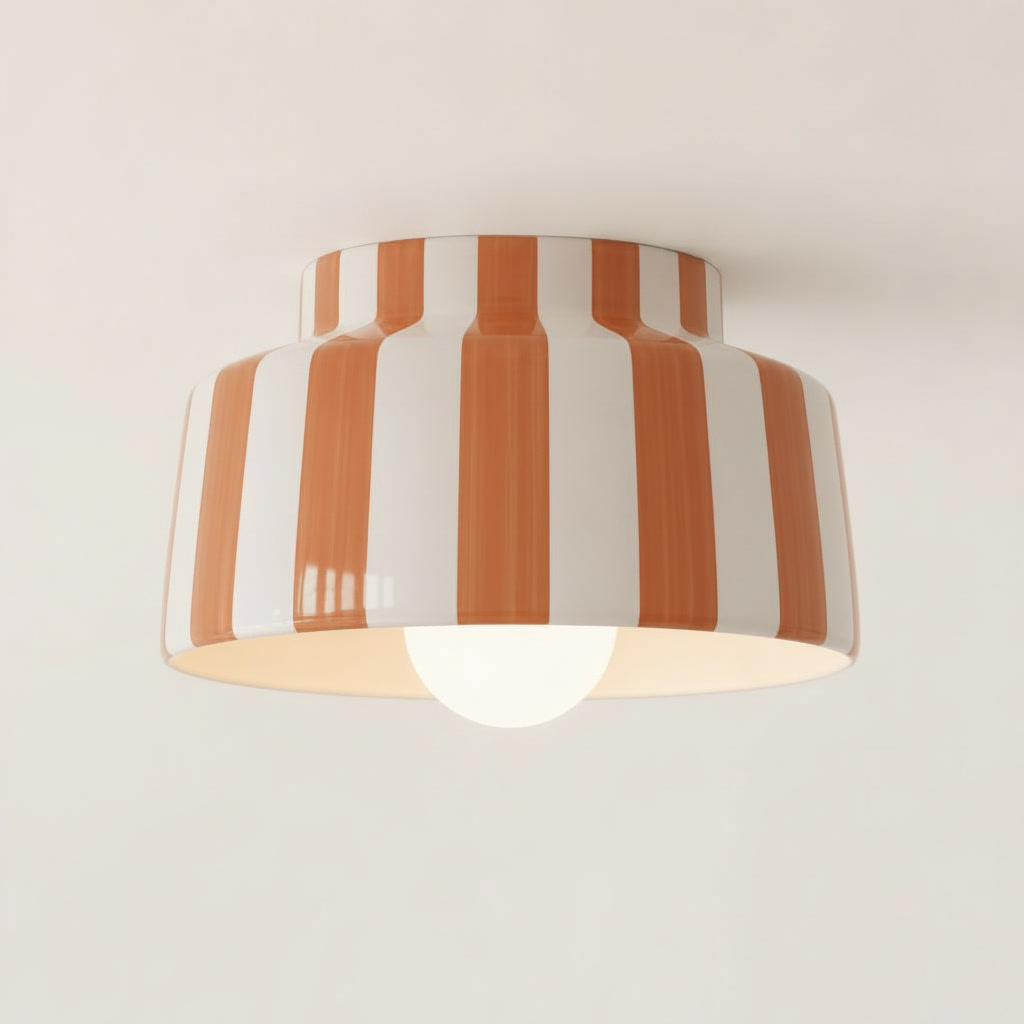
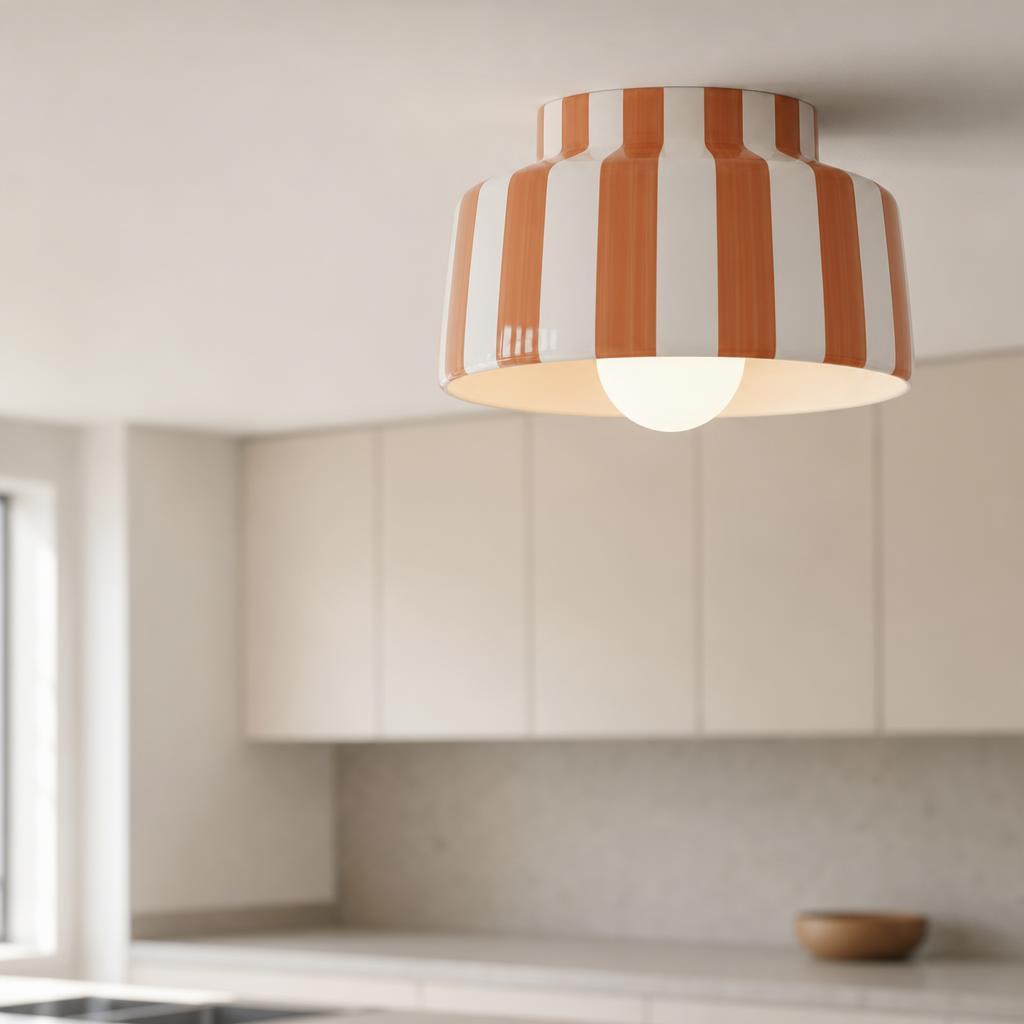
Tiered Ceramic Pendant Light with Red Berry Design
Add sculptural character overhead with this tiered ceramic pendant light, featuring a cream multi-level ceramic shade decorated with dark branches and red berry accents. Designed for kitchens, dining areas, bedrooms, and hallways.
$210.00
Design Highlights
A distinctive multi-tiered ceramic silhouette creates architectural depth, while dark branch motifs and ruby-red berry accents bring organic detail to the glossy cream surface.
Materials & Finish
- Glazed ceramic tiered shade
- Metal mounting / suspension hardware
- Cream / off-white ceramic finish
- Charcoal branch decoration
- Ruby-red berry accents
- Designed for indoor use
Where It Works Best
Ideal above kitchen islands and dining tables, or as decorative ceiling lighting in bedrooms, hallways, and entryways where the tiered silhouette can become part of the interior design.
Product Details
Type: Pendant / Flush-Mount Ceiling Light
Main Material: Glazed Ceramic
Color: Cream, Charcoal & Ruby Red
Pattern: Botanical Branch & Berry
Style: Sculptural / Decorative / Contemporary
Use: Indoor
Collection: Ceramic Pendant Lights
Art Ceramic protections
- Secure payments
- Data privacy
- Money-back guarantee
- Delivery guarantee
- 24/7 support
- Easy returns and refunds
Tiered Ceramic Pendant Light with Red Berry Design
Bring sculptural form, ceramic texture, and botanical detail overhead with this tiered ceramic pendant light. Its multi-level cream ceramic shade creates a distinctive architectural silhouette, while dark branches and ruby-red berry accents introduce a softer decorative layer across the glazed surface.
The contrast is what gives the design its character. The stepped ceramic form feels structured and contemporary; the botanical motif feels organic and expressive. Together, they create a ceiling light that can become part of the interior even when it is switched off.
Designed for indoor spaces including kitchens, dining rooms, bedrooms, hallways, and entryways, this fixture works especially well where overhead lighting needs to contribute more than simple illumination.
A Sculptural Tiered Ceramic Pendant Light
The defining feature of this fixture is its stacked, multi-tiered silhouette. Instead of using one continuous dome or bell shape, the ceramic body is built around several cylindrical levels that change in width as they move vertically through the fixture.
Those changing proportions create depth and shadow across the ceramic surface. From a distance, the light reads almost like a small architectural object suspended from the ceiling. From closer range, the stepped profile gives the botanical decoration several distinct surfaces to move across.
This makes the fixture especially suitable for interiors where the ceiling light is expected to contribute to the composition of the room rather than disappear into it.
Over a dining table, kitchen island, breakfast area, or entryway, the tiered shape can create a clear focal point while still maintaining a relatively compact visual footprint.
Cream Ceramic with Dark Branches and Red Berry Accents
The ceramic shade uses a cream or off-white base that keeps the fixture visually light and easy to integrate into a broad range of interiors.
Across that neutral surface, dark branch motifs introduce movement and contrast. Small red berry details then add controlled points of color without turning the entire fixture into a saturated statement piece.
This palette is particularly versatile because each element can connect with a different part of the room. The cream ceramic can relate to walls, stone, plaster, cabinetry, or textiles. The dark branches can echo black hardware, dark wood, or charcoal accents. The red berries can connect subtly with artwork, ceramics, upholstery, or warmer natural materials.
You do not need to repeat every color elsewhere. One or two visual connections are enough to make the pendant feel intentional within the space.
Ceramic as a Material for Decorative Ceiling Lighting
Ceramic brings a different presence to ceiling lighting than metal or glass. It has visual weight, surface depth, and the ability to carry both sculptural form and decorative pattern.
On this pendant, the glazed finish helps define the stepped shape while giving the branch-and-berry motif a clear background. The ceramic body remains visible throughout the day, meaning the fixture continues to work as a decorative object even when the light is not in use.
That dual role is central to the Art Ceramic approach: lighting should contribute to the room as an object as well as a source of illumination.
A Pendant Light for Kitchen Islands
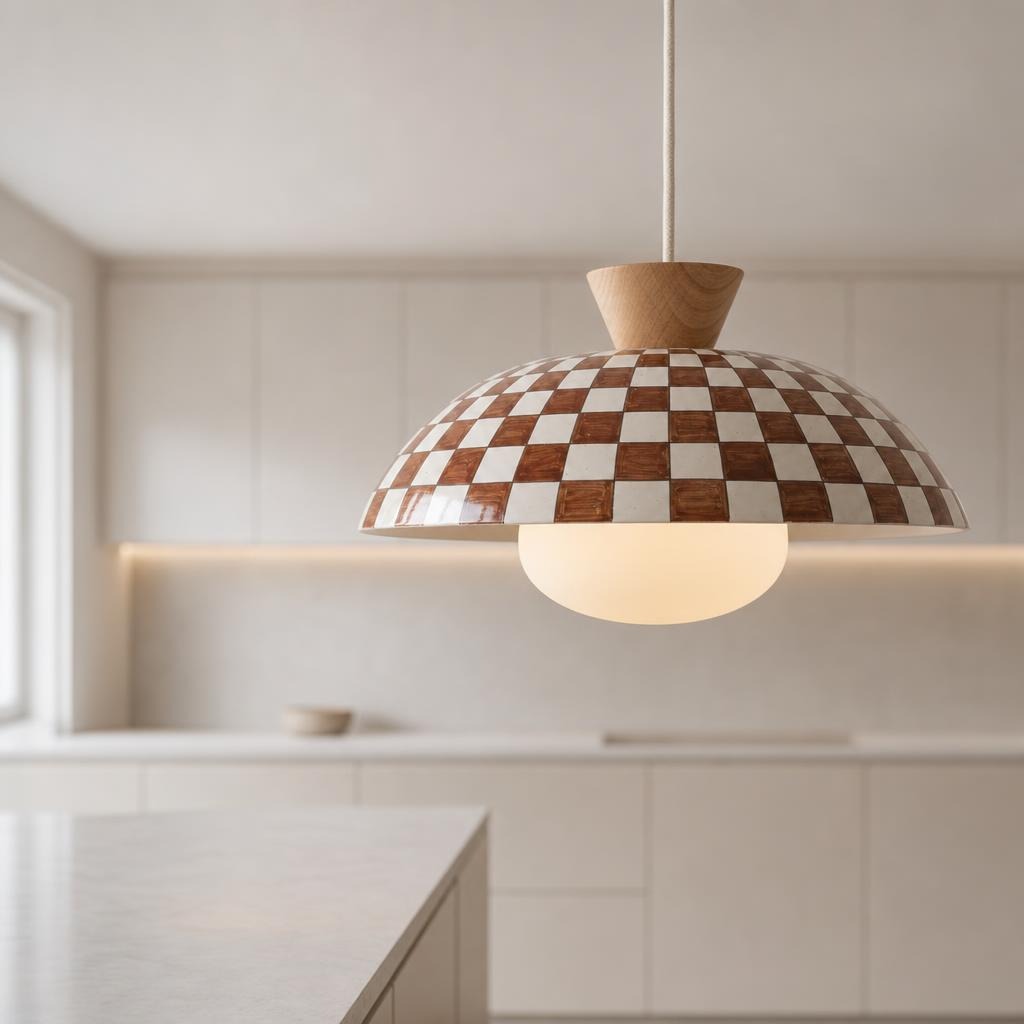
Kitchen islands are one of the strongest settings for a tiered ceramic pendant light because the sculptural form can contrast beautifully with the cleaner lines of cabinetry, stone, and work surfaces.
The cream ceramic keeps the fixture easy to combine with warm white, beige, natural timber, green, brown, charcoal, and stone finishes. The red berry details can then act as a small decorative accent above the island without dominating the wider kitchen palette.
In a smaller kitchen, a single pendant can provide a clear focal point. In a larger space, repeating the design may create a stronger rhythm where the scale of the island and ceiling height allow.
Browse more Ceramic Pendant Lights to compare additional silhouettes and finishes for kitchen and dining spaces.
Dining Room Lighting with Botanical Detail
Above a dining table, the fixture becomes part of one of the most important visual zones in the room.
The tiered shape helps establish a clear center over the table, while the botanical decoration introduces detail at a height that might otherwise be occupied by a plain metal or glass fixture.
The pendant works especially well with materials that balance its decorative surface rather than compete with it. Natural wood, linen, woven seating, stone, warm white walls, muted greens, and simple ceramics can all provide an effective surrounding palette.
Because the berry motif already gives the light its own pattern, table linens and nearby textiles can remain relatively restrained.
Pendant or Close-to-Ceiling Placement
The current product information describes this fixture for both pendant and flush-mount applications. That makes the design flexible enough to work across rooms with different ceiling heights and proportions.
A hanging pendant installation creates stronger visual emphasis and can be particularly effective above a table, island, or defined seating area.
A closer-to-ceiling installation can suit hallways, bedrooms, entryways, or interiors where a lower profile is more practical.
The choice changes the relationship between the ceramic object and the room. Suspended lower, the fixture becomes more sculptural and furniture-like. Installed closer to the ceiling, the tiered form reads more as an architectural detail.
A Decorative Ceiling Light for Bedrooms
Bedrooms often benefit from softer decorative elements rather than purely functional ceiling fixtures.
The cream ceramic and botanical motif can introduce pattern overhead while leaving nightstands and bedside surfaces free for other objects. The red accents are small enough to add personality without making the bedroom feel visually busy.
Pair the fixture with natural bedding, warm wood, textured fabrics, woven rugs, and neutral walls for a calm, layered look. If the room already includes botanical artwork or greenery, the branch motif can create a subtle connection without making the space feel themed.
Hallway and Entryway Lighting with More Character
Hallways and entryways are often treated as purely transitional spaces, but the right ceiling fixture can make them feel more intentional.
The tiered ceramic silhouette gives these areas a decorative focal point without using floor or furniture space. In an entryway, it can help establish the visual language of the home from the moment someone enters.
In a hallway, a closer-to-ceiling configuration can add pattern and ceramic texture where walls might otherwise remain simple.
Styling the Red Berry Ceramic Pendant
Because the fixture already combines sculptural form with botanical decoration, the strongest styling usually comes from contrast and restraint.
Warm white and cream create a soft continuation of the ceramic base. Natural timber adds warmth. Charcoal or black accents can connect with the branch motif. Muted green works naturally with the botanical theme, while terracotta and burgundy can relate to the red berry details.
Stone and travertine introduce another tactile surface without adding competing pattern. Linen and woven materials can soften the more structured geometry of the tiered shade.
The goal is not to make everything match. The pendant should feel like a distinctive object that still belongs within the material palette of the room.
Pattern Without Overwhelming the Interior
Decorative ceiling lighting can become difficult to style when both the silhouette and surface pattern are extremely strong. This design avoids that by balancing its elements.
The form is sculptural but built from simple rounded tiers. The ceramic base is neutral. The botanical linework is dark and graphic, while the red berries appear as smaller accents rather than large fields of color.
That balance allows the fixture to introduce personality without requiring the surrounding room to become equally decorative.
Designing with a Single Pendant or Repeated Fixtures
A single tiered pendant can work as a focal point over a smaller dining table, breakfast area, or entryway.
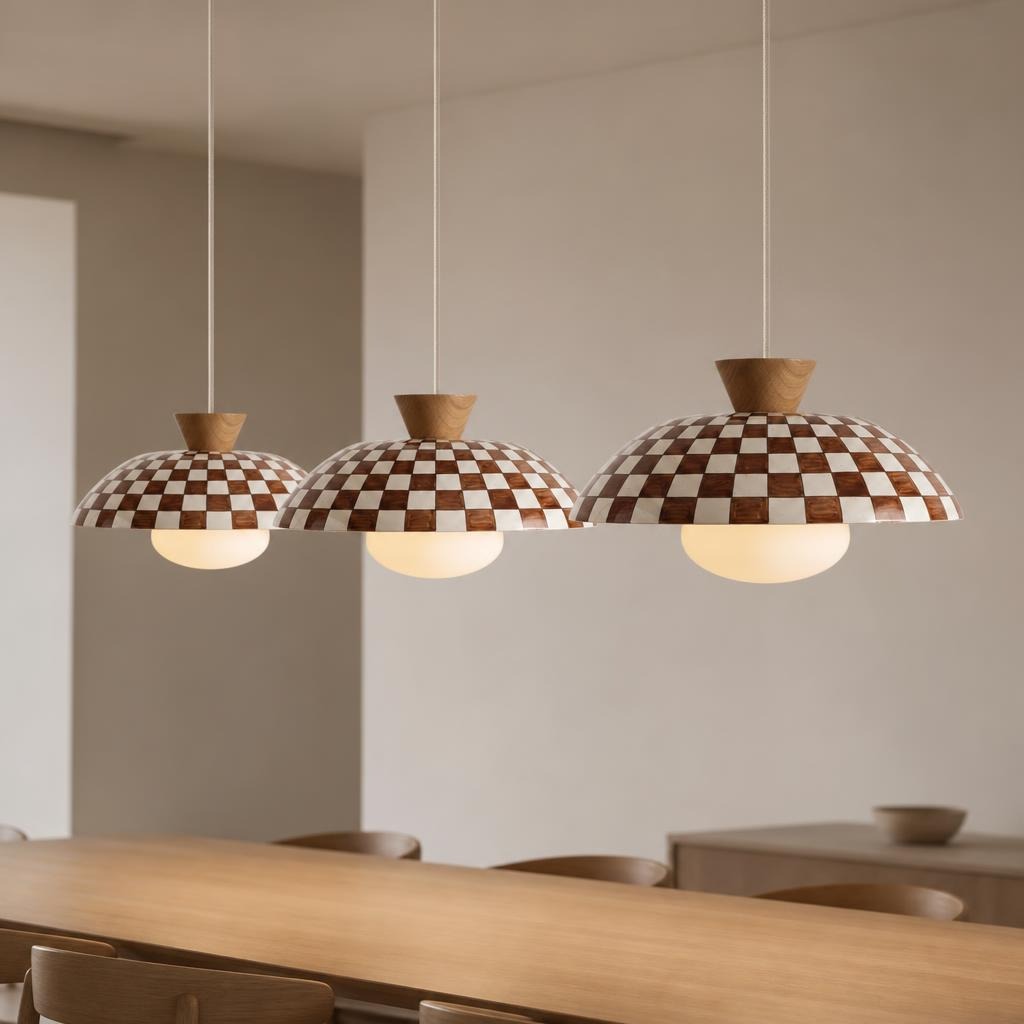
In larger spaces, repeating the same fixture can create rhythm and visual continuity. A row of ceramic pendants over an island, for example, can emphasize the length of the surface below while repeating the same material and pattern overhead.
Because final spacing depends on the size of the fixture, ceiling height, and furniture dimensions, the composition should be planned around the actual room rather than a fixed rule.
Layered Lighting Throughout the Home
Ceiling lighting works best when it is part of a broader lighting scheme rather than the only source of light in the room.
Pendant fixtures provide the upper layer and help define larger zones. Ceramic Wall Sconces can bring illumination to walls, corridors, and architectural surfaces. Ceramic Table Lamps create smaller pools of light near seating, beds, and furniture.
These pieces do not need to match exactly. Repeating ceramic as a material can create enough continuity while allowing each fixture to have its own shape, color, or pattern.
A Decorative Object in Daylight
One of the advantages of ceramic lighting is that its value is not limited to the hours when the light is switched on.
During the day, the tiered ceramic body acts as a sculptural object overhead. The stepped silhouette creates shadow. The glossy surface catches natural light. The branch-and-berry motif remains visible as part of the room's decoration.
After dark, the same fixture becomes part of the lighting atmosphere. That transition from object to light source is what gives decorative ceramic fixtures their lasting presence within an interior.
Where to Use This Tiered Ceramic Pendant Light
Kitchen Island
Use the stepped ceramic form to contrast with clean cabinetry, stone counters, and linear kitchen architecture.
Dining Room
Position it above a dining table to establish a decorative center and introduce botanical detail from above.
Breakfast Nook
A single pendant can help define a smaller eating area without requiring additional furniture or wall decoration.
Bedroom
A pendant or closer-to-ceiling installation can introduce pattern overhead while keeping bedside surfaces free.
Hallway or Entryway
Use the tiered silhouette to turn a functional ceiling fixture into a more considered architectural detail.
Why Choose a Tiered Ceramic Pendant Light?
A conventional ceiling light can disappear into the architecture. A tiered ceramic pendant does the opposite: it gives the ceiling a material and sculptural presence.
The multi-level form creates depth, while the ceramic surface allows decoration to become part of the object itself. In this design, the cream base, dark branches, and red berries create a balanced composition that can work in contemporary, warm modern, eclectic, and natural-material interiors.
It is a strong choice for anyone looking for lighting that contributes to the room before the bulb is even switched on.
Complete the Look with Art Ceramic
Explore the complete Ceramic Pendant Lights collection for more overhead lighting in different shapes and finishes.
Combine pendant lighting with Ceramic Table Lamps for furniture-level illumination and Ceramic Wall Sconces for a decorative wall-lighting layer.
Together, these different lighting types can create a more flexible, layered, and visually connected interior.
Frequently Asked Questions
What colors are used on this ceramic pendant light?
The current product information describes a cream or off-white ceramic base with charcoal branch motifs and ruby-red berry accents.
What makes the tiered design different from a standard pendant?
The shade uses several stacked ceramic levels instead of one continuous dome, giving the fixture a more sculptural and architectural silhouette.
Where can I use this tiered pendant light?
It is designed for indoor ceiling lighting and can work above kitchen islands, dining tables, breakfast areas, in bedrooms, hallways, and entryways.
Can this fixture be installed close to the ceiling?
The current product information lists both pendant and flush-mount applications, allowing the design to suit different ceiling heights and room types.
Does it work in modern interiors?
Yes. The structured tiered form works well with contemporary interiors, while the botanical decoration adds a softer decorative contrast.
Can I combine it with other ceramic lighting?
Yes. Pair it with ceramic wall sconces and table lamps to create lighting at several heights while repeating ceramic as a material throughout the interior.

Reviews
Clear filtersThere are no reviews yet.